
How the Garden Was Built
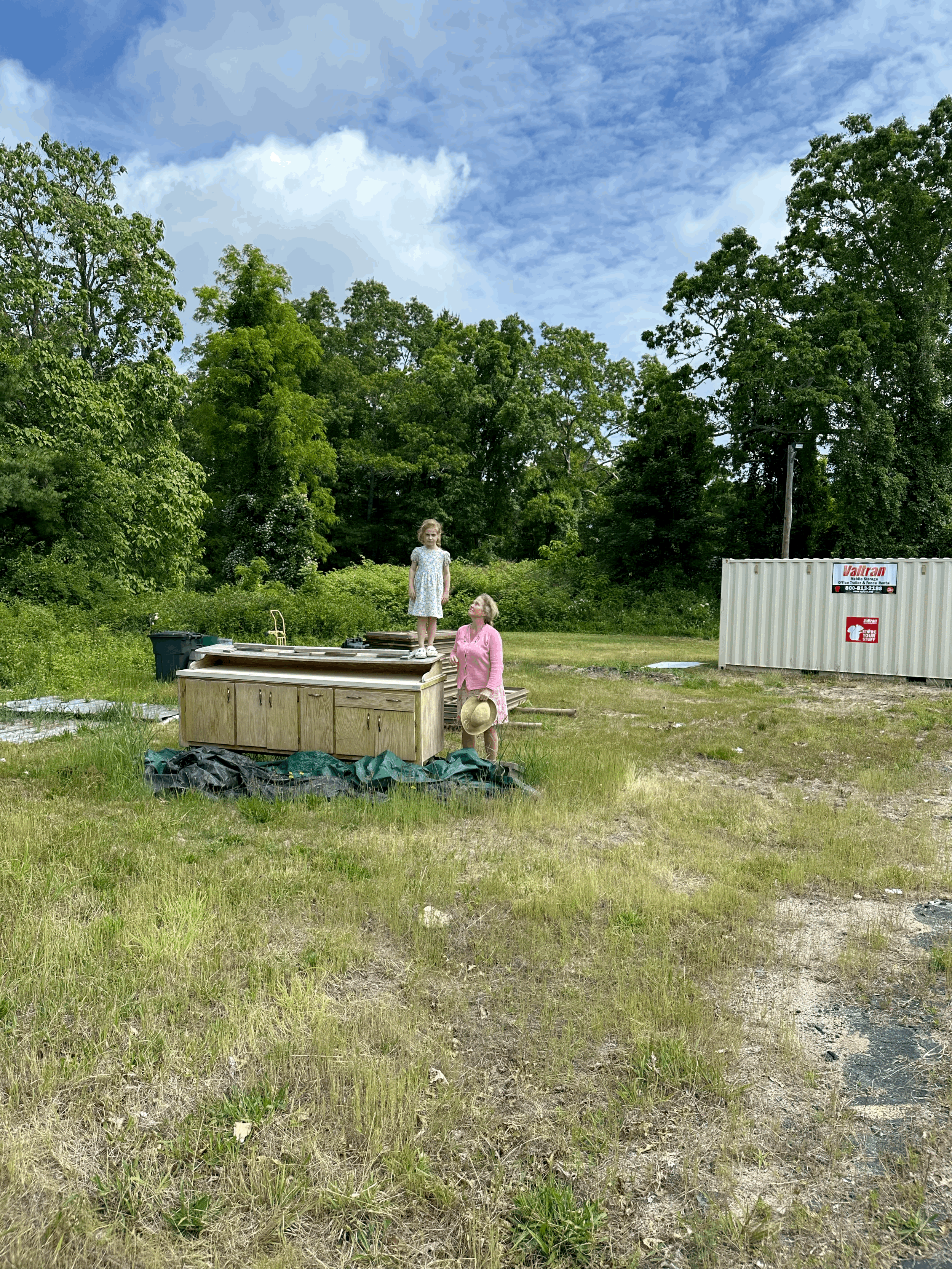
This photo shows me with my granddaughter, Thayer, as I explain why I plan to build a vegetable garden right here on the edge of the parking lot. In the background, you can still see the old telephone pole. The metal storage locker was once used to hold surplus COA gear before the addition was built onto the back of the building.
Over time, this spot had turned into a waystation for items no one wanted anymore but were too good to throw away. Cabinets, folding tables, an old man truck—items left to weather outdoors until everyone finally agreed they could go to the landfill. I always found it unattractive.
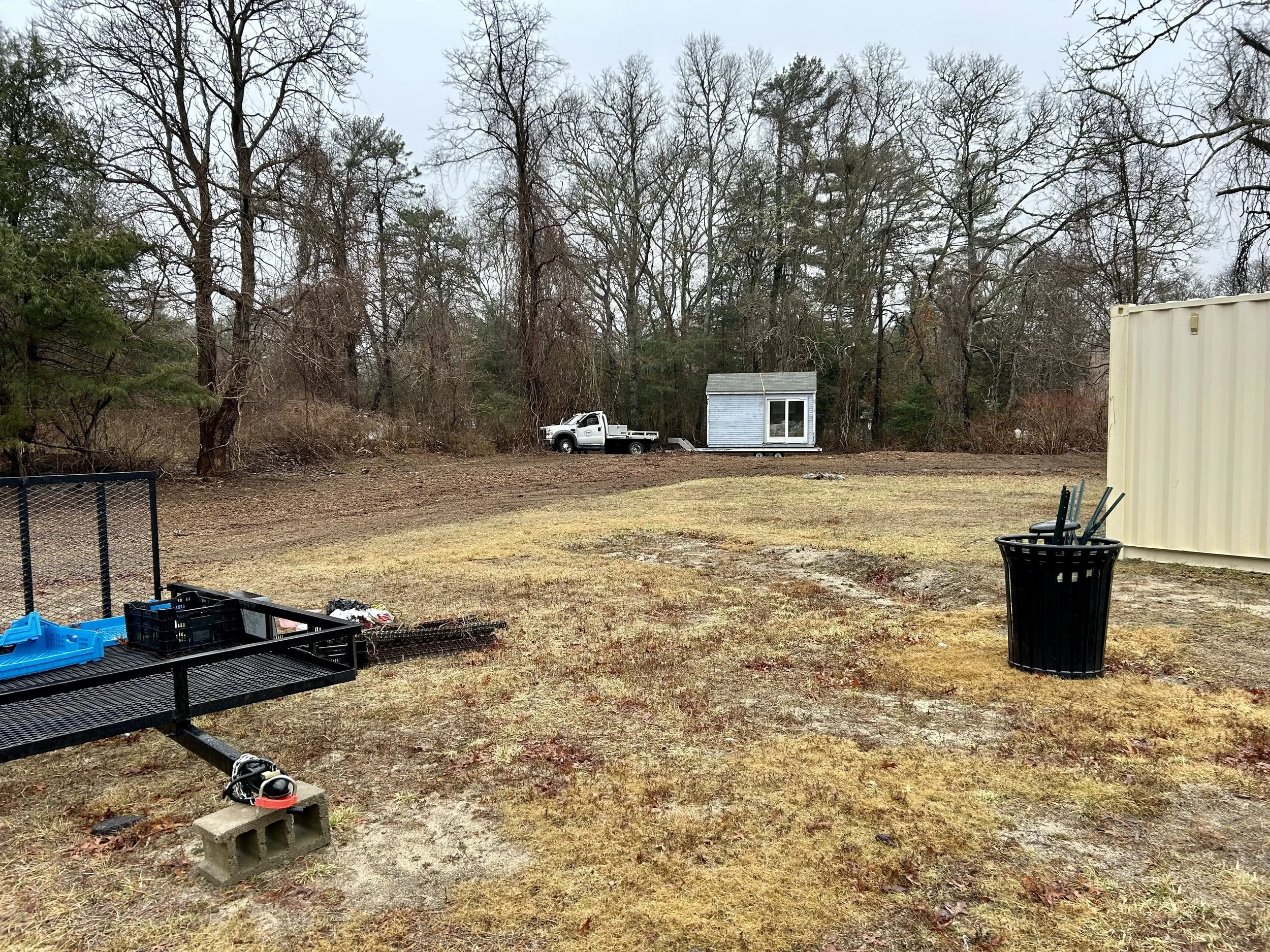
The land itself is essentially a burial ground for rocks excavated when Route Six was widened back in the 1970s. One person called it “dead dirt,” and I have to agree. It looks like ordinary soil on the surface, but underneath lies a dense layer of tightly packed rocks. That’s why no trees or shrubs ever managed to take root. There’s no electricity, no town water—just a wide-open expanse with full southern sun.
I knew in my bones this was the perfect place for a garden. If we could successfully grow vegetables here, anyone could follow our method and have the same success.
Below are the highlights from our first three years, 2023-2025.
2023 HIGHLIGHTS
Established herb garden for COA. Partnered with the Elizabeth Taber Library, supported their seed bank, and organized a tour of Marion’s Secret Veg Gardens, raising about $300 for the Library.
On February 14, 2023, at 3:00 p.m., the Marion Community Garden was called to order. Barbie Burr, Kerry Hayes, Madeline Cooke, and Tara Calabrese met with the shared intention of creating a community vegetable garden.
Just outside the kitchen door at the Council on Aging (COA) stood five raised beds, built in 2020 during the height of COVID and since abandoned. Joan Gardner insisted this was the perfect place to begin.
On March 10, 2023, Sunnynook Farm delivered 10 yards of excellent compost and 20 bales of straw. We ordered seeds from Johnny’s Selected Seeds—enough to share with the Elizabeth Taber Library—set up a 30-gallon trash barrel on cement blocks as a rainwater reservoir, and decided to focus first on growing herbs.
Why herbs? First, the COA chef greatly desired them for nutrition, flavor, and variety. Second, herbs thrive with minimal care, rarely attract pests or predators, and require no fencing. Third, they are beautiful. Positioned along the COA entrance, these five raised beds were sure to catch the eye of many visitors.
On March 21, we filled jugs with soil and seeds for winter sowing—a technique that was still quite uncommon three years ago. Even we weren’t certain how well it would work.
By April 17, we had added a larger water tank and a small goldfish pond. Local artist Lynne Parks Kuhl designed our logo, and Village Signs in Mattapoisett crafted a beautiful sign. Woven grapevines soon framed the entry. We drew inspiration from visits to other community gardens, including Round The Bend Farm and Hefland Farm in Dartmouth, as well as gardens in Sandwich and Wellesley.
Pumpkins sprouted volunteer-style in the compost by May 30. On June 2, we planted hundreds of tiny herb seedlings lovingly grown by Chrissy and Ann. Pollinator housing went up on June 16, followed by an orange bench on June 19.
Over the summer, the garden came alive: plants erupted, herbs flourished, butterflies swarmed, and waterlilies bloomed in the pond. We posted a lot of it on our Instagram Page, MarionVeg
On September 29, 2023, we proudly organized Marion’s first-ever Secret Vegetable Garden Tour. All proceeds—approximately $300—were donated to the Elizabeth Taber Library.
2023 was productive, but our location was too close to moving traffic and too shaded by tall pines. We hoped to relocate, specifically to a desolate yet sunny half-acre rock graveyard on the far side of the parking lot. (Spoiler alert- We got it!)
2024 Highlights
On February 21, the Town of Marion authorized the creation of a Community Garden on the far side of the COA parking lot. We got to work immediately.
Site Improvements
March 6: Cleared invasive Japanese knotweed to make way for an 8’x12’ potting shed on a landscape trailer.
March 8: A bucket truck removed two dead trees and stripped invasive vines from healthy ones.
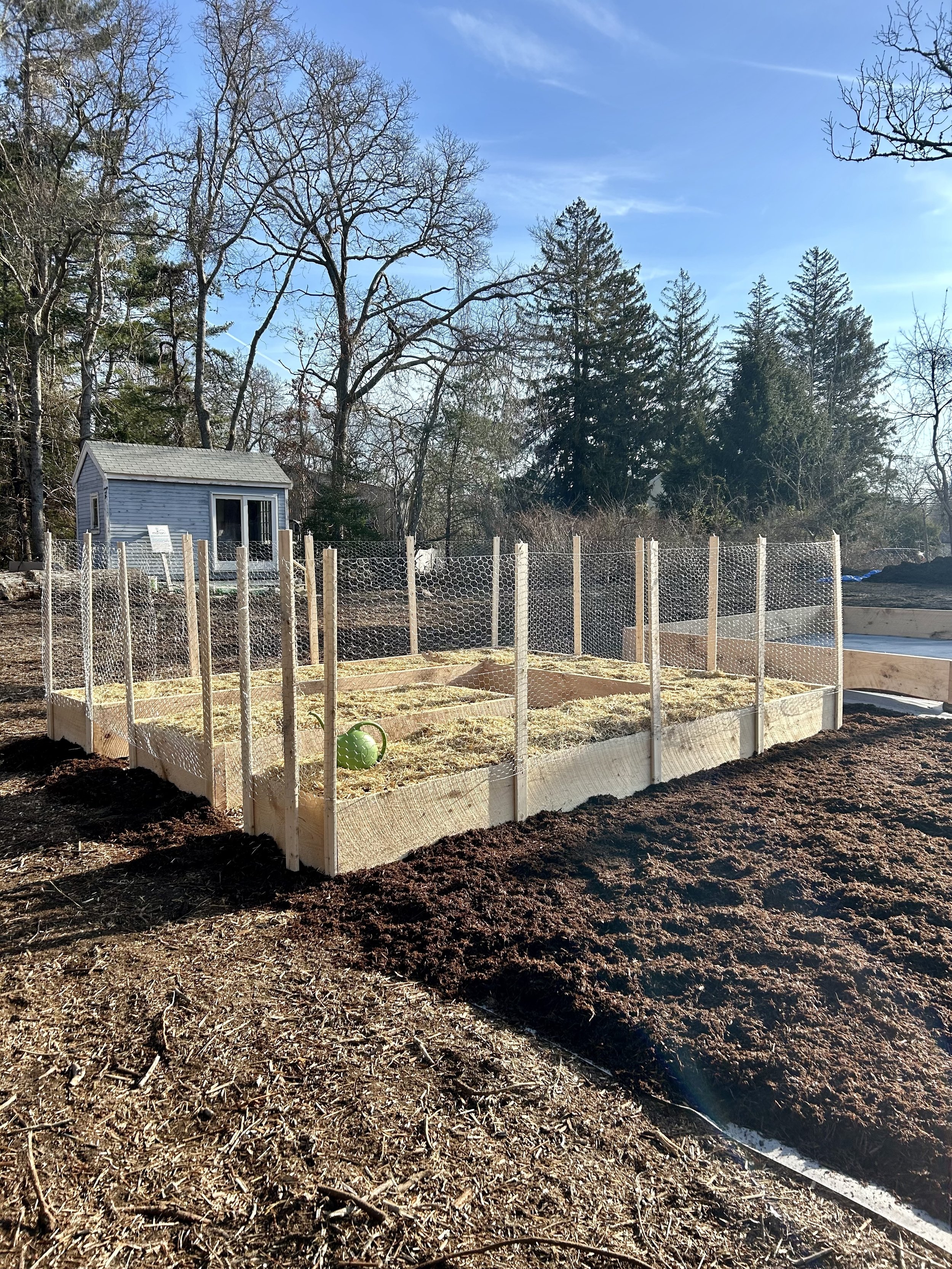
March 13: Staked out a 29’x60’ area and covered it with landscape fabric to serve as a base for the ten allotments. We built one 10’x12’ allotment box using 2”x12” rough hewn 12’ boards from Gurney Sawmill to see what it would look like. We also built stairs for the potting shed.
March 20: built four additional allotment boxes, and started filling them with compost from Sunnynook Farm, which we keep stockpiled for general use.
April 5: Dug in 25 jugs with seeds for winter sowing.
April 9: Added cow panel tunnels, a cow panel compost round, and a bamboo hut.
Individual allotments were fenced in a variety of ways.
Gutters were installed on the potting shed, along with a 300-gallon rainwater collection system.
Home Garden Support
Beyond developing onsite allotments at the Cushing Community Center (3C’s), we support home gardeners. For families interested in growing in their own yards, we visited sites, offered design suggestions, and supplied lumber, compost, straw, seeds, and plants. We also provided ongoing troubleshooting and guidance through common challenges.
Crops Produced
WOOHOO!! Indisputably, we showed how to raise food off grid, organically, with minimal water and minimal maintenance on land of the poorest quality.
The garden yielded an impressive bounty, including: Peas, strawberries, ginger, turmeric, basil, oregano, popcorn, cayenne, peppers, chives, beans, carrots, beets, cherry tomatoes, stevia, kale, garlic, onions, eggplant, rhubarb, various squash, watermelon, multiple tomato varieties, rosemary, sage, lavender, parsley—and a wide array of edible flowers such as pansies, dahlias, nasturtium, alyssum, bee balm, feverfew, calendula, gladiolas, borage, sunflowers, bachelor’s buttons, cornflowers, and Dianthus. Brussels sprouts, broccoli, and cauliflower were tasty, but did not perform as well.
Secret Garden Tour
We partnered with the Elizabeth Taber Library to host the 2nd Annual Tour of Marion’s Secret Vegetable Gardens on August 19. Three private gardens and two community gardens opened to the public, inspiring approximately 50 participants and raising $300 for the library. The event received excellent coverage in Sippican Weekly over two consecutive weeks, sparking widespread interest in home vegetable growing.
We also collaborated with the library to offer seeds through the ETL Seed Bank. Looking ahead, we hope to become a satellite location, eventually loaning garden tools from our shed.
Revised Mission
Our identity clarified. In Marion, summertime is for friends, family and ocean living. Springtime, we run outdoors to breathe fresh air and celebrate as our grayish brown world greens in. We garden hard as soon as the earth softens. But between Memorial Day and Columbus Day, we are too busy to do much more than forage. Marion’s Community Garden adopted that rhythm and flourished. We became less concerned with large-scale food production and more focused on innovative growing methods that free people from weeding and watering. We realized our goal is to increase the number of people who cultivate their own personal gardens. We aim to educate through hands-on example and demonstration.
2025 Highlights
By 2025, Community Veg had built ten allotments and created a welcoming space with a tool shed, sitting benches, composting systems, a 300-gallon water catchment, and a 30-gallon fish pond. We kept ample stocks of materials on hand: bales of straw, organic soil, hand tools, seeds, and seedlings. Bees, butterflies, and hummingbirds fluttered about, while wildflowers swayed along the perimeter. Best of all, food was growing everywhere.
We had proven that with SIFI Gardening, anyone can grow food almost anywhere—with minimal water and minimal work—and do it successfully.
With these accomplishments in place, our goal for 2025 shifted to promoting the SIFI design more widely. We compiled plant lists, ordered seeds, and developed ten one-hour workshops so people could see firsthand how we create a (nearly) maintenance-free garden.
We also built a 10’×12’ greenhouse, which has proven invaluable as a meeting place. Who doesn’t love stepping into a warm, sunny outdoor room on a winter day? The greenhouse doubles as a clean, dry space for videotaping our garden shows. ORCTV (Old Rochester Community Television) filmed all ten workshops and returned in September to document our progress. The videos have garnered more than 200 views on YouTube. Having a regular show on cable TV gives our community garden meaningful structure and visibility. Thank you, ORCTV—you truly are The People’s Media!
We chose Veterans Day, November 11, as the ideal time for Community Veg’s annual meeting. By then, the growing season can officially be declared over, and “vicars” (plot holders) know whether they wish to reenlist for the next year. Prospective vicars also need plenty of lead time to plan and prepare, so handing over allotments in November makes practical sense.
We held our First Annual Meeting on November 11, 2025, inside the Council on Aging building, with ORCTV there to film it. Attendees expressed strong interest in meeting more regularly, leading to the creation of Garden Chat—an informal weekly discussion group about all things vegetable gardening. Since then, we’ve held these gatherings in the greenhouse, and ORCTV has continued filming them. The conversations have sparked countless ideas and exciting new threads to explore.
We are now developing a newsletter and website, steadily overcoming the technical hurdles. To everyone reading the newsletter: thank you! Please don’t be shy about sending questions, comments, or suggestions—they help us create better content and keep the conversation growing.