
April has been Cold
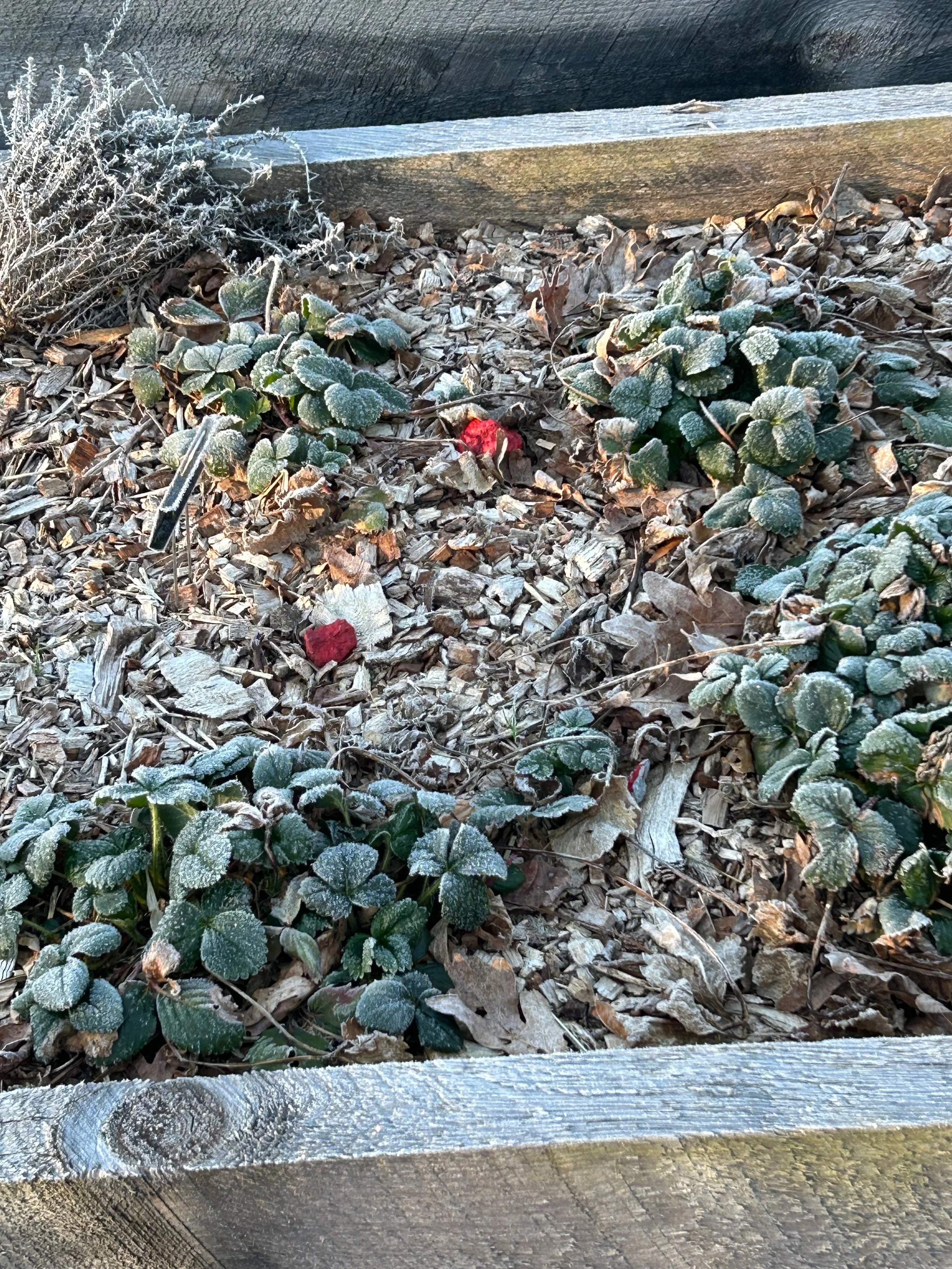
April 9, 2026, frosted strawberries nested in a pine bark mulch. Red rocks are meant to fool birds.
Community Veg Marion 2026: A Slow but Steady Start
Community Veg Marion 2026 is off to a slower start than we’d hoped. Last year at this time, Brooke and I were much farther along with building our SIFI (“Set It and Forget It”) garden.
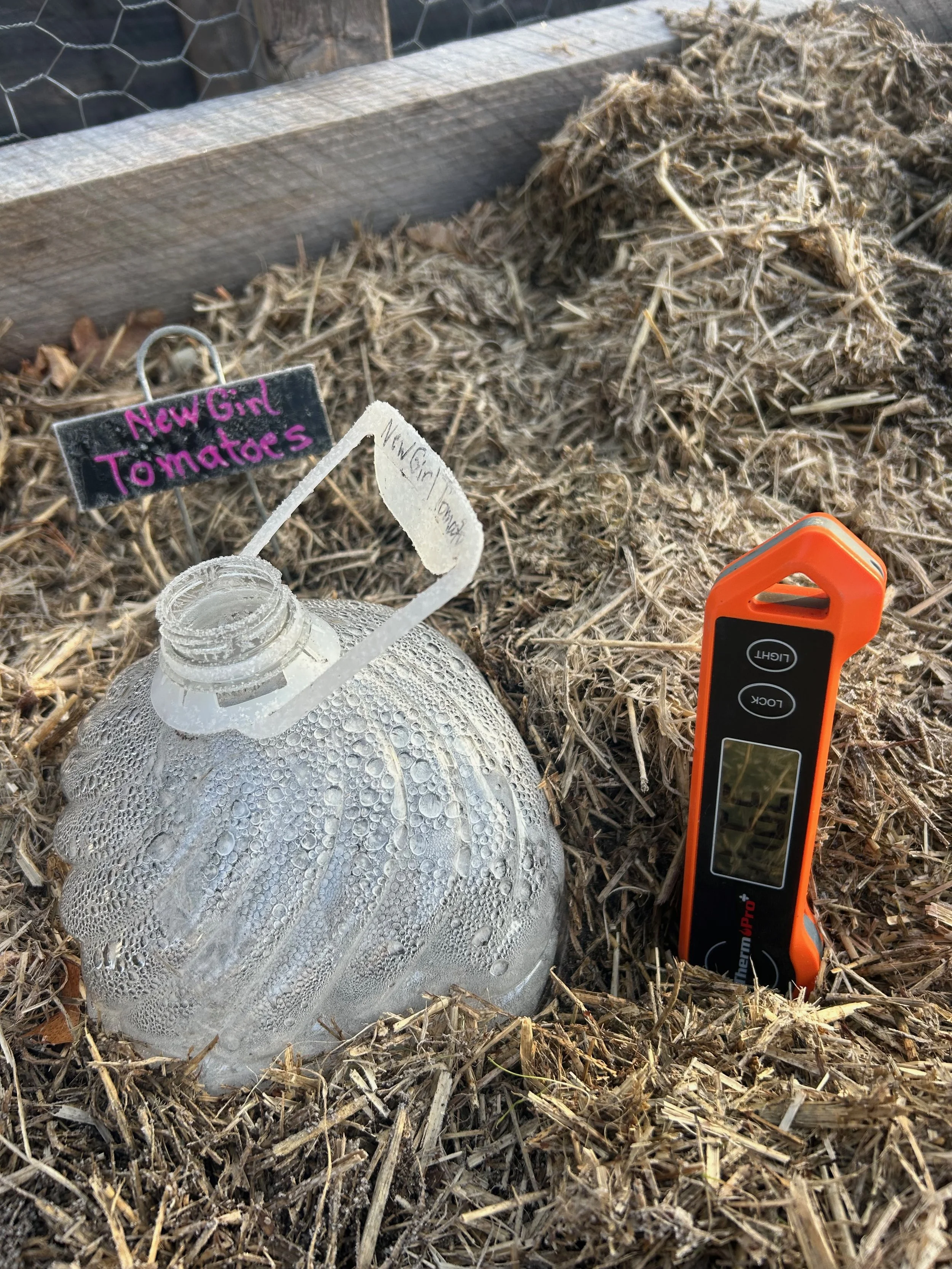
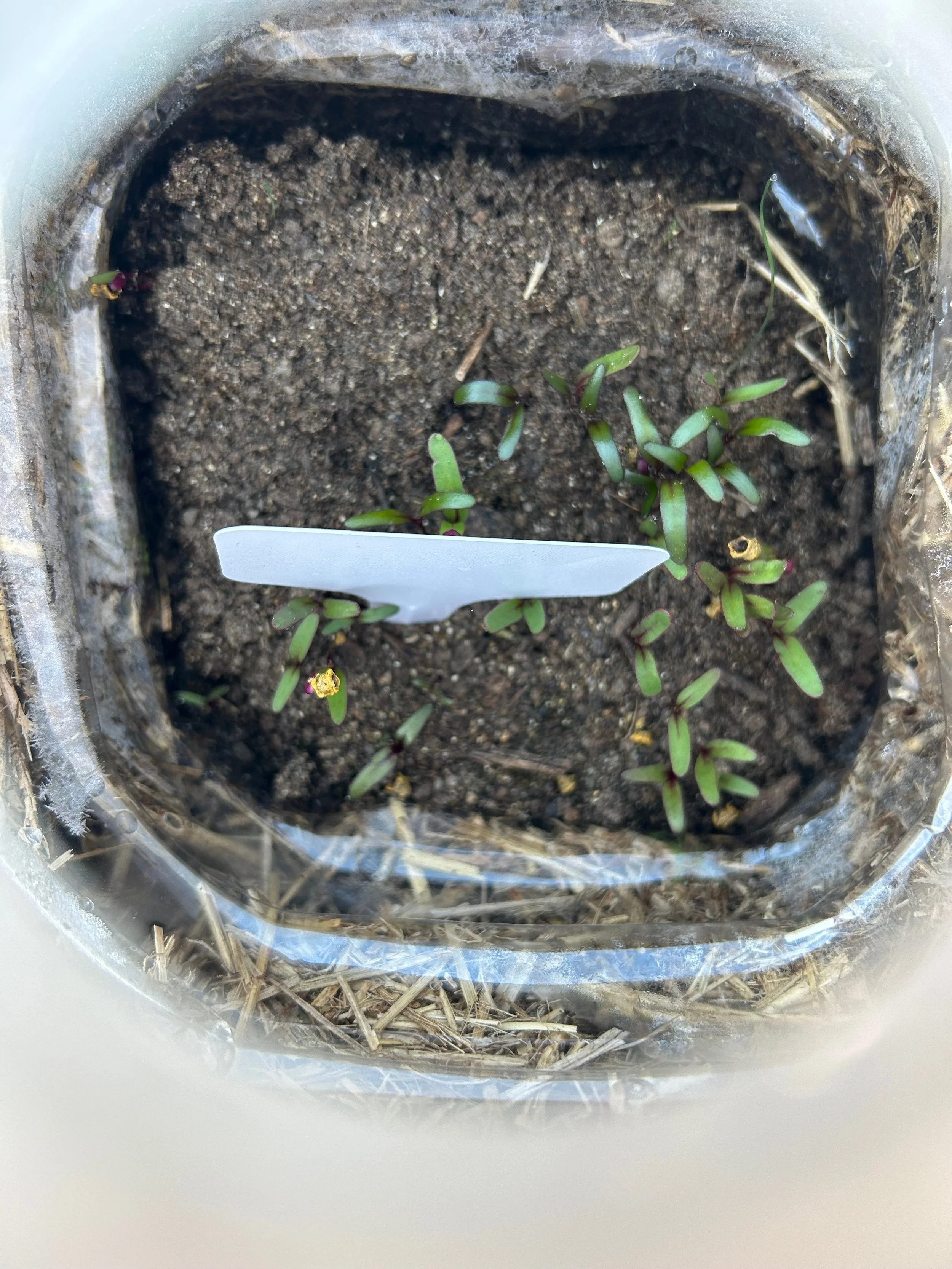
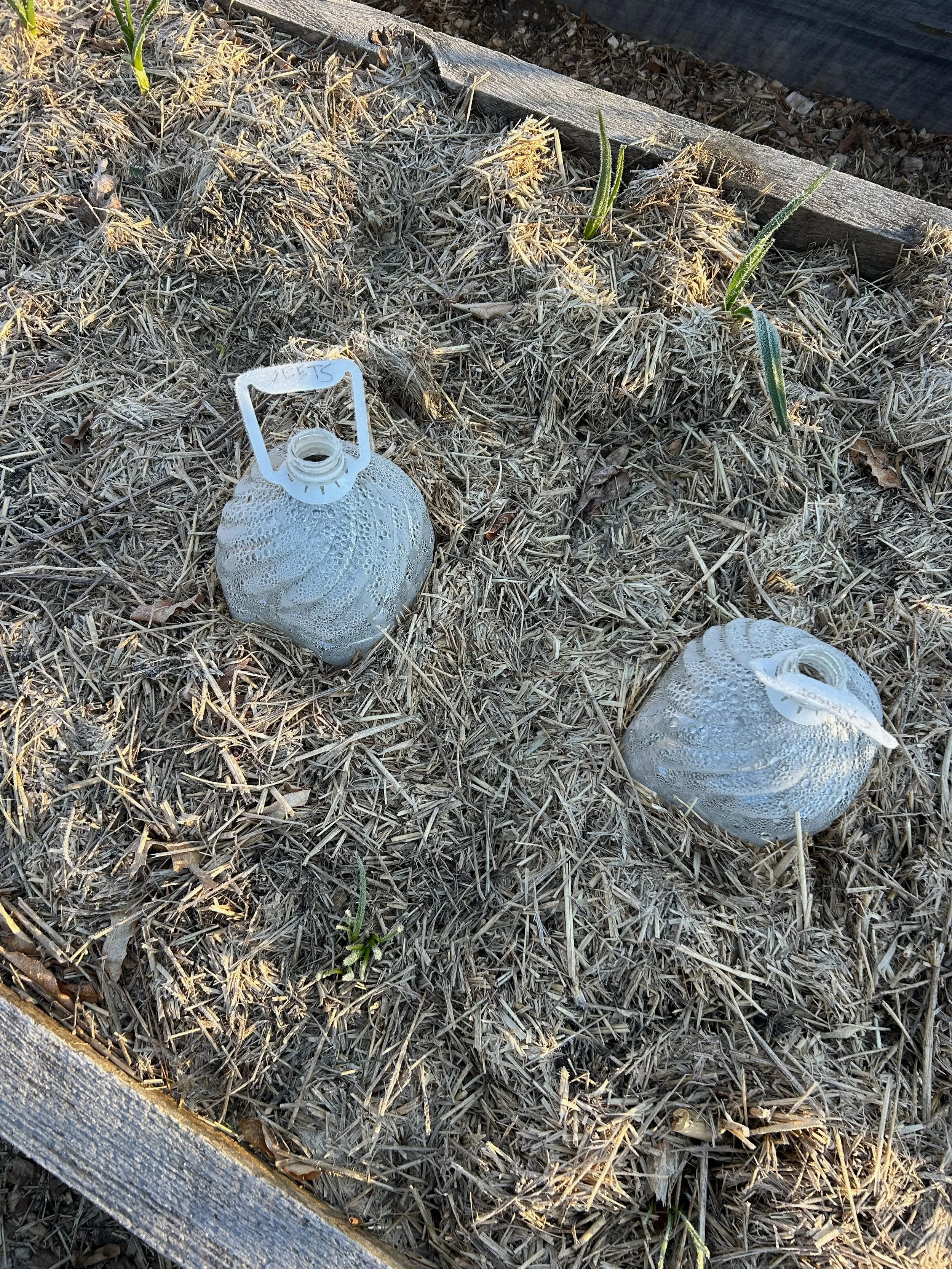
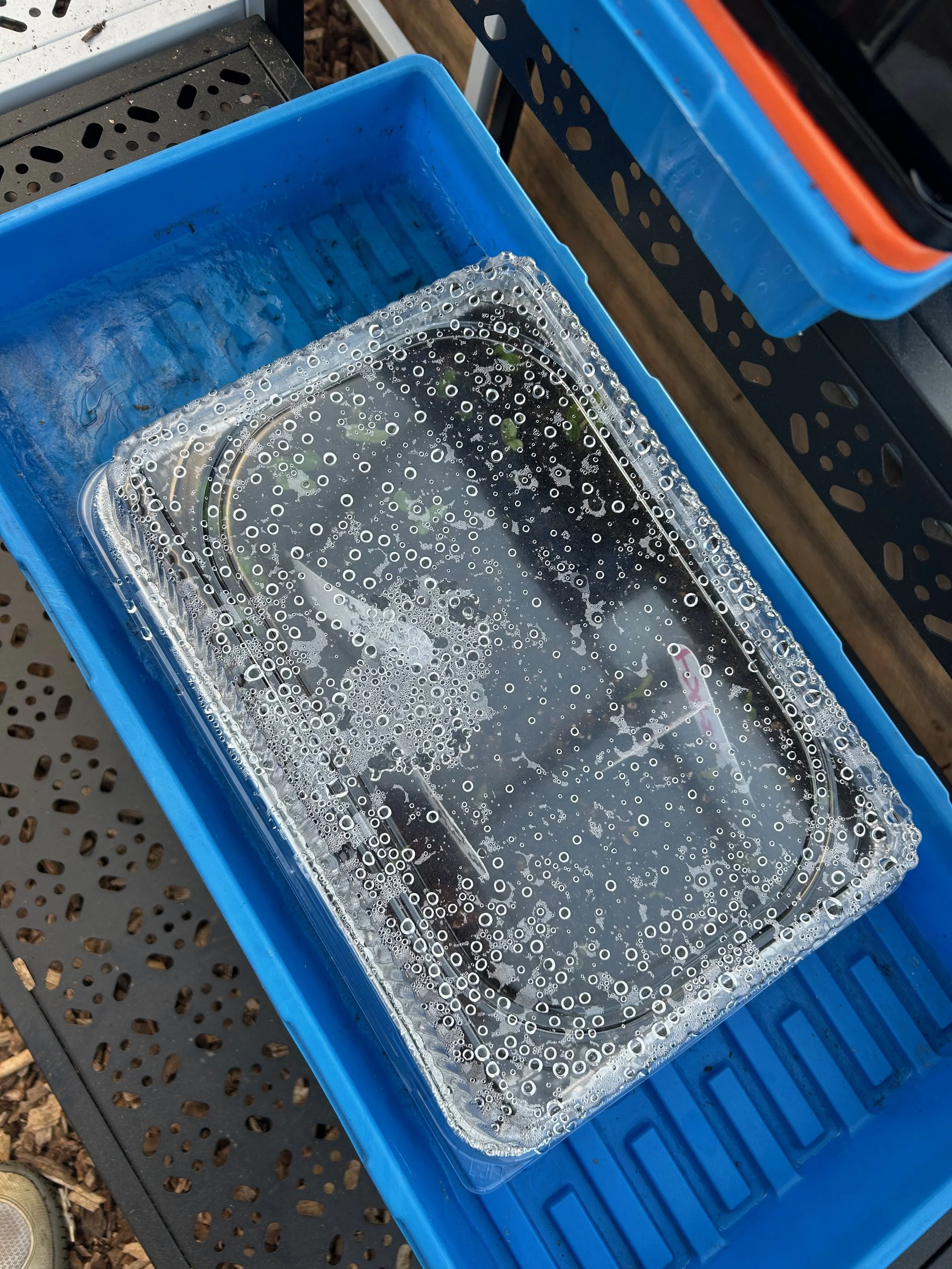
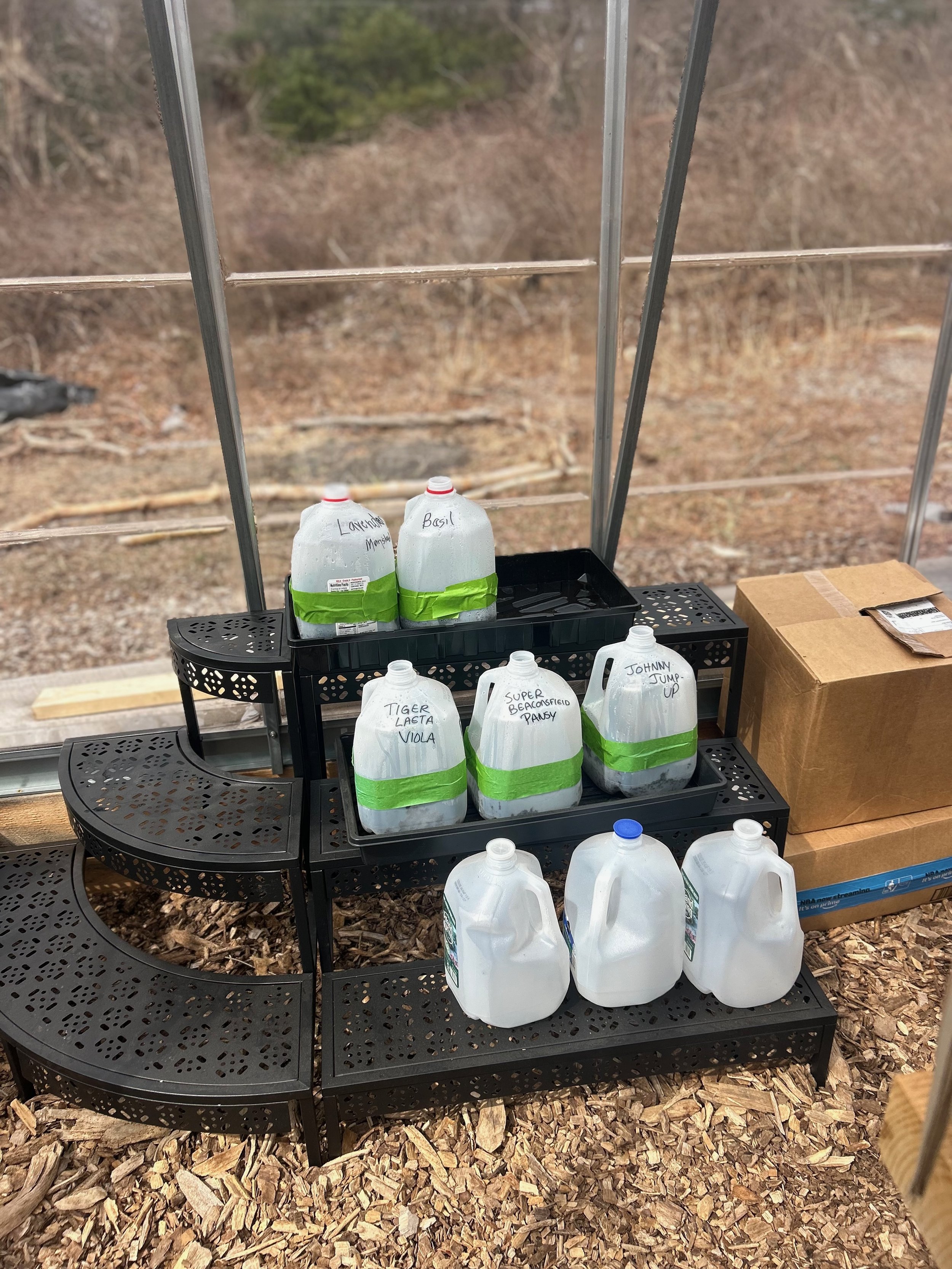
Despite the freezing cold, gray-brown, damp, and thoroughly uninspiring weather, we managed to get some jugs planted in the allotments. A trusty meat thermometer tells us the temperature of the ground. We’re also pioneering clear juice jug domes, under which we direct-seeded carrots and beets. An iPhone allows us to inspect progress. They’re doing surprisingly well, and we already have lots of sprouts coming up. We still intend to be on autopilot by Memorial Day, though our energy seems to be drifting in several directions at once.
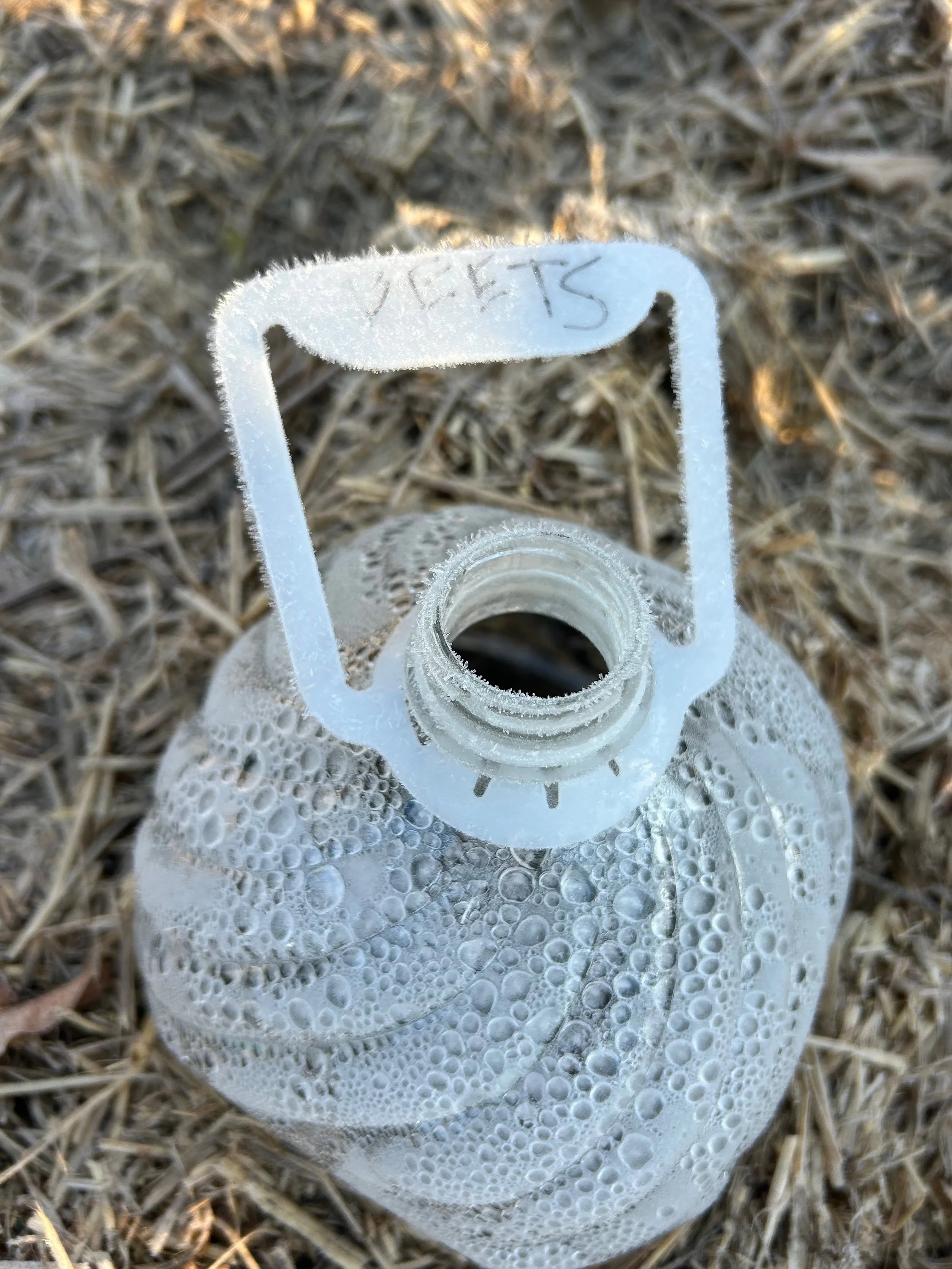
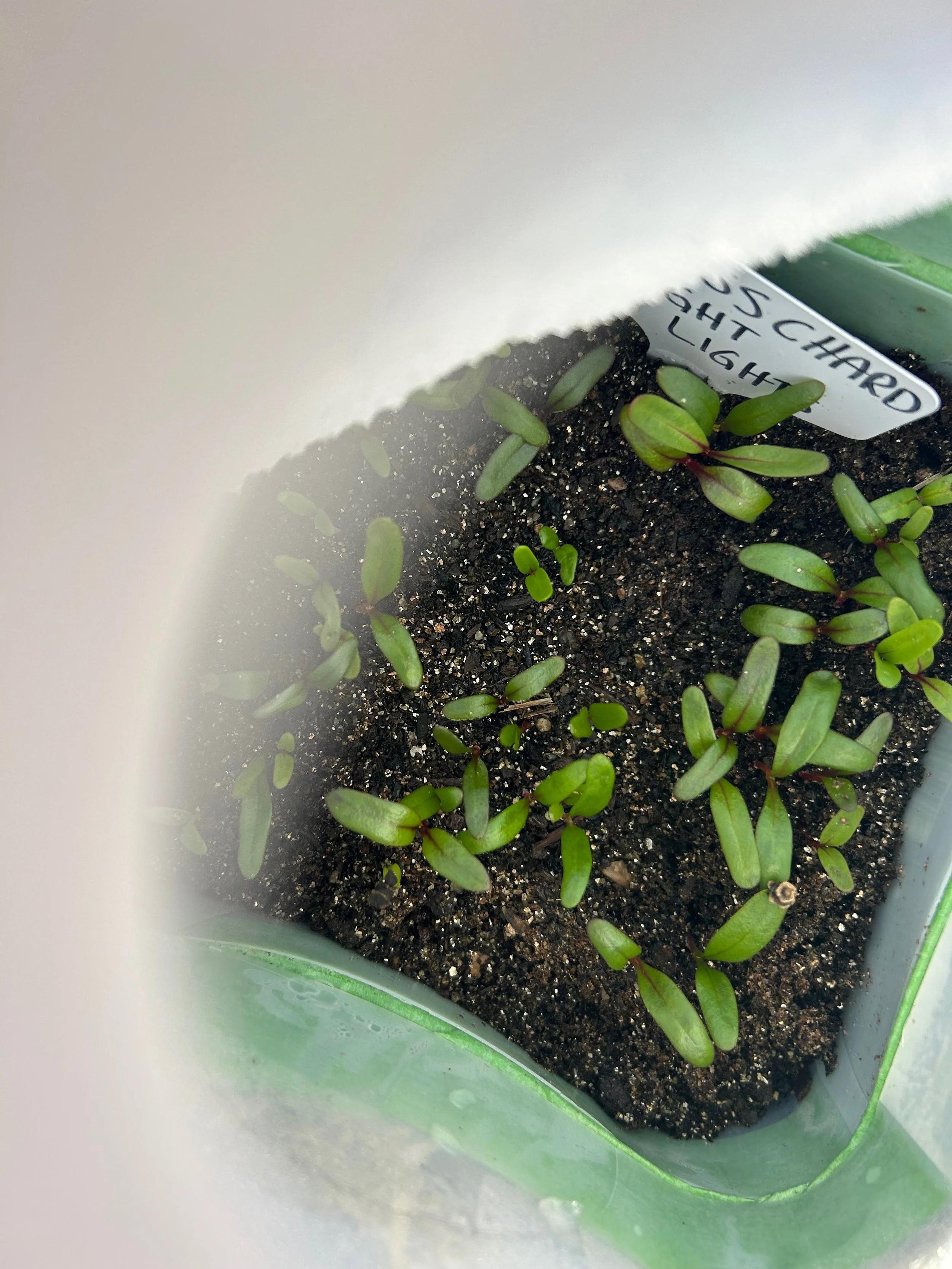
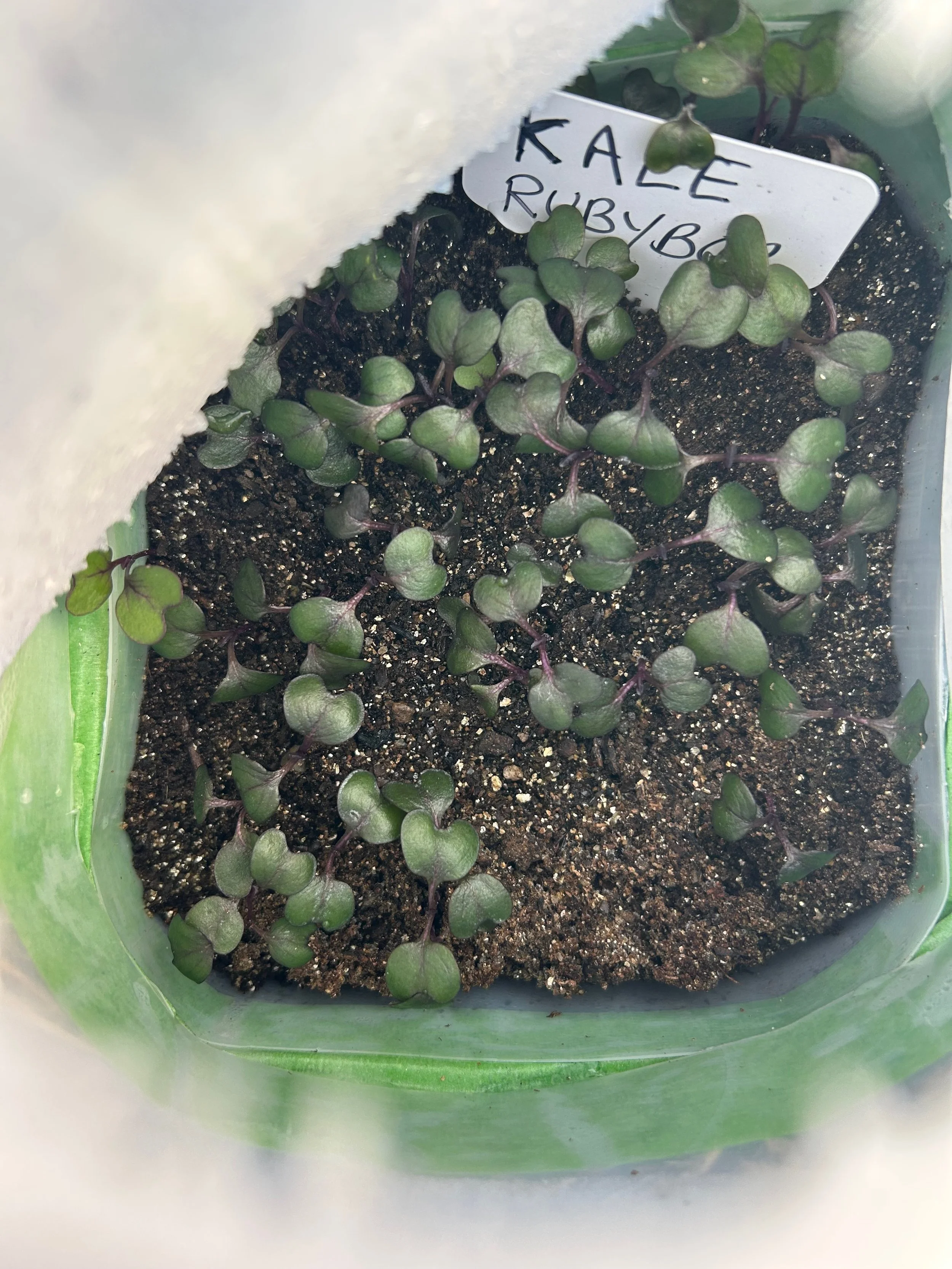
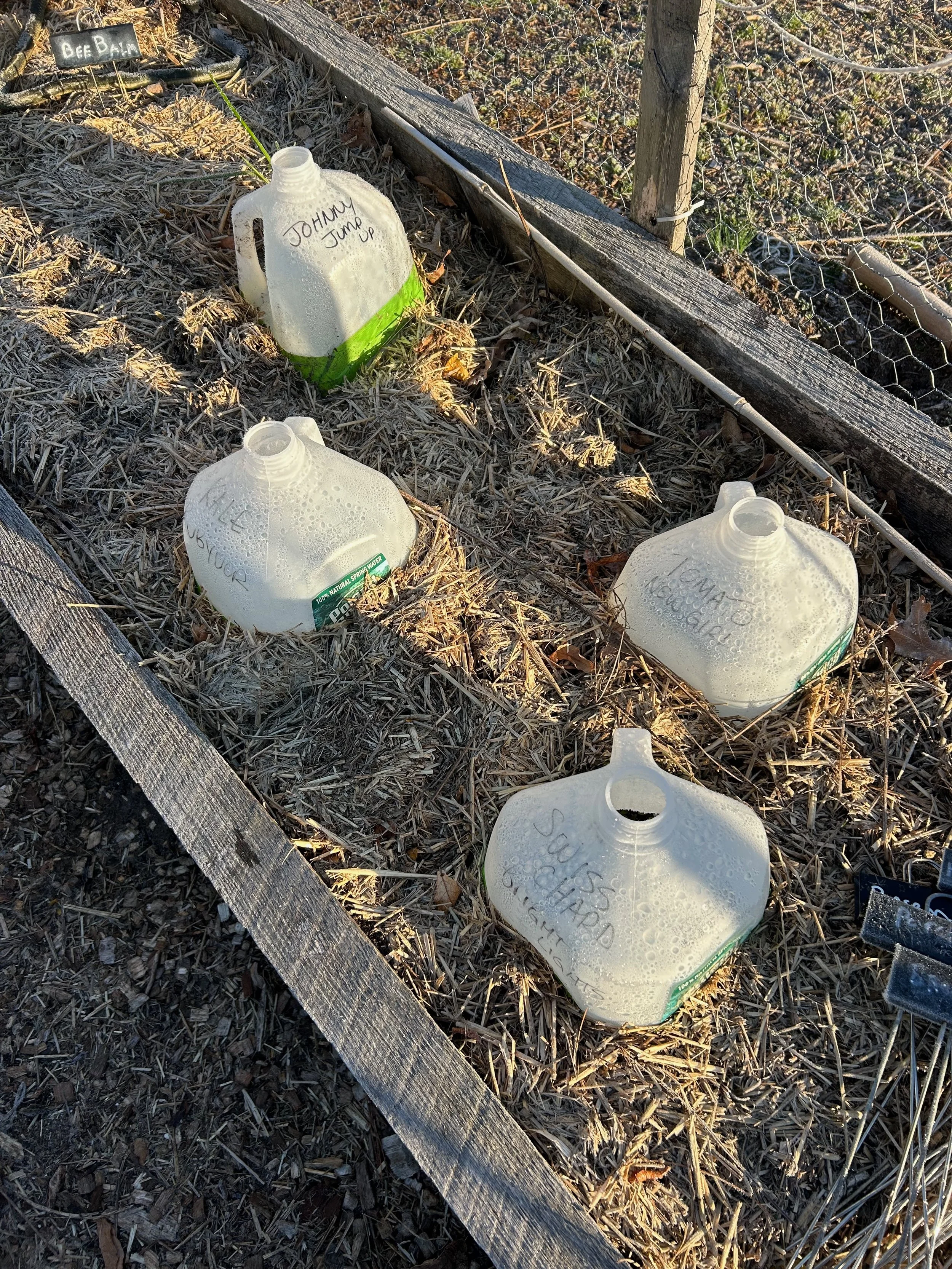
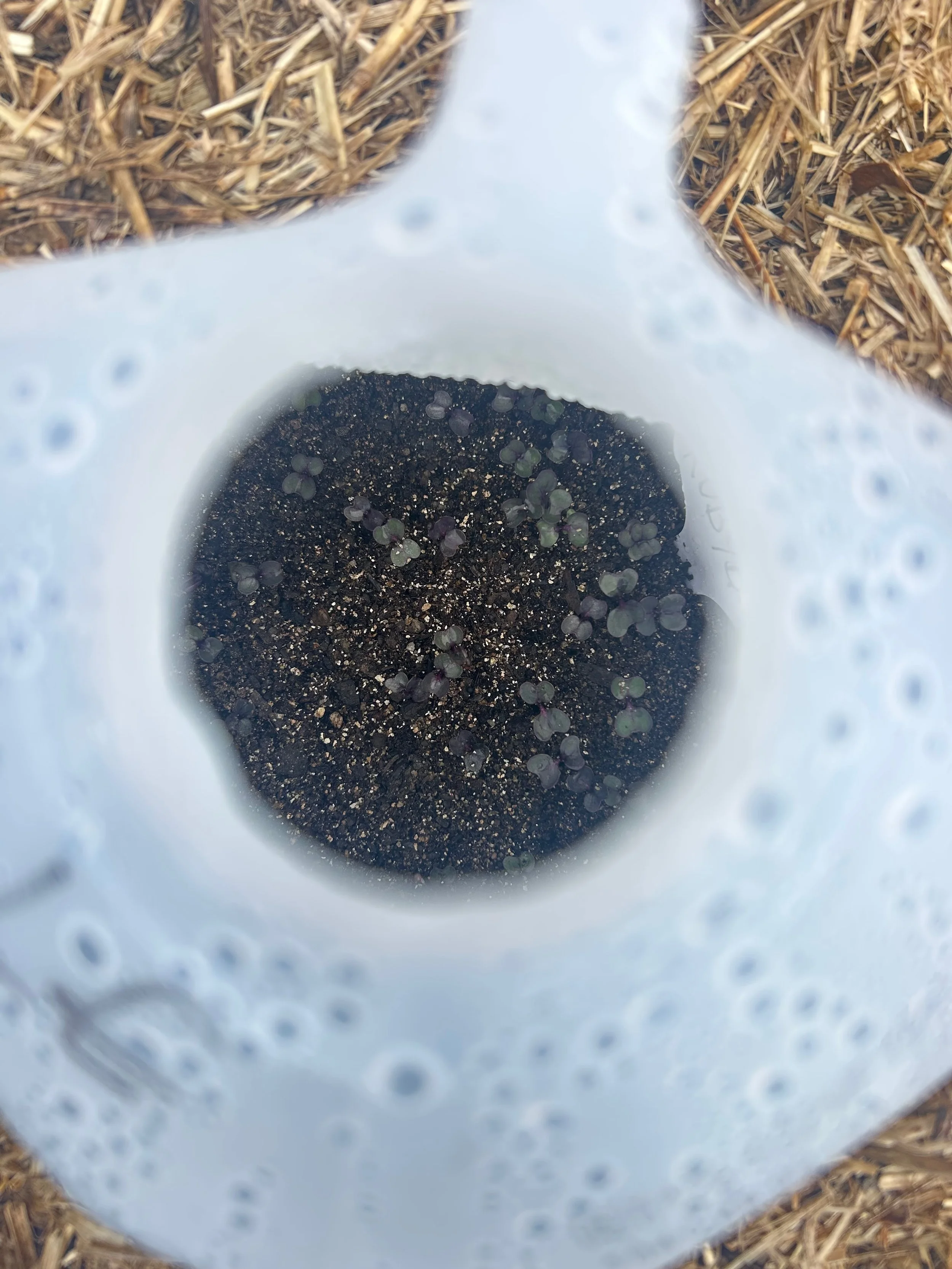
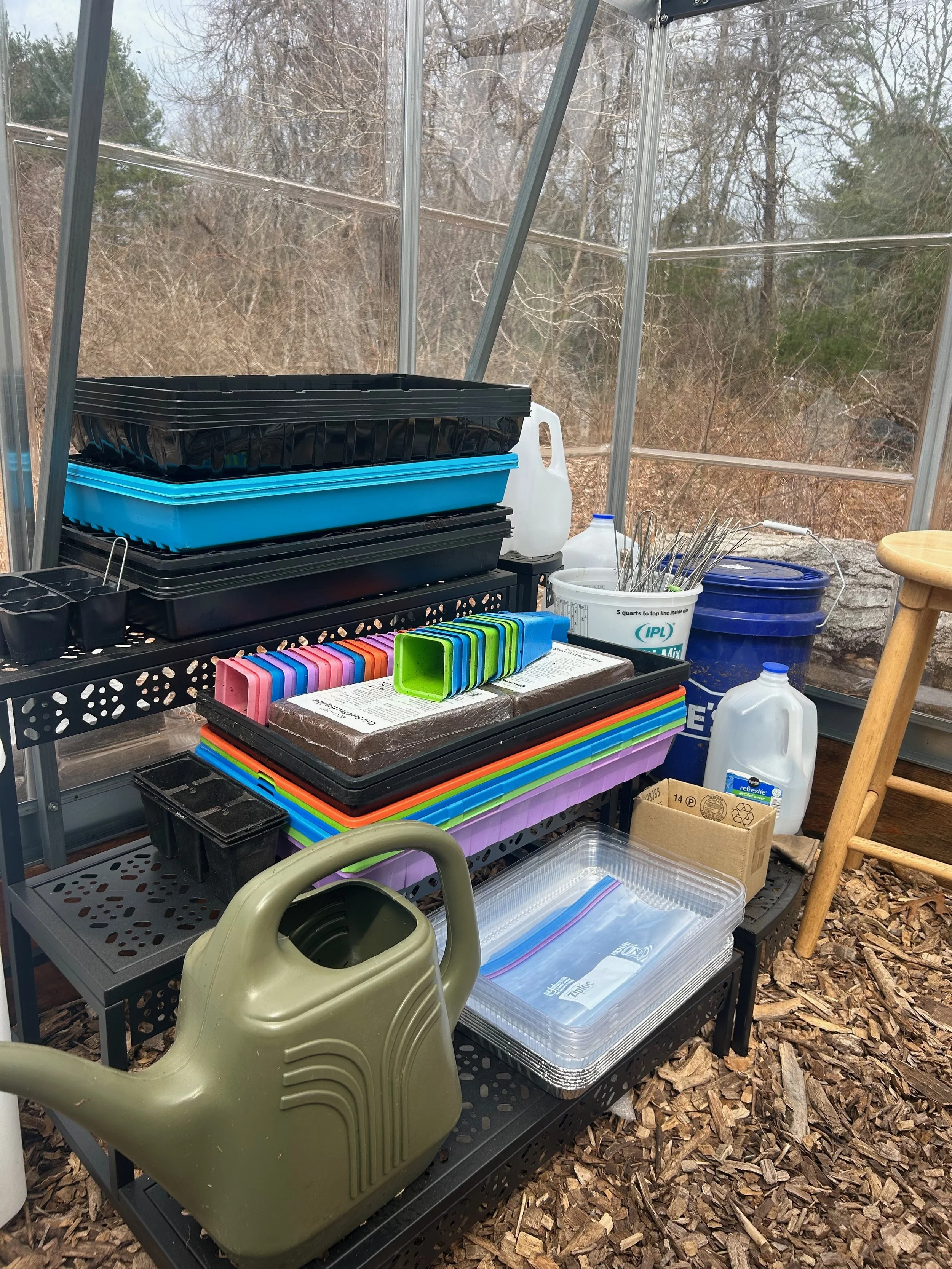
Brooke has been figuring out how to make the most of the new greenhouse. We have good stockpiles of supplies, and to my amazement, there’s already quite a bit growing in jugs and grow trays.
SOIL BLOCKS
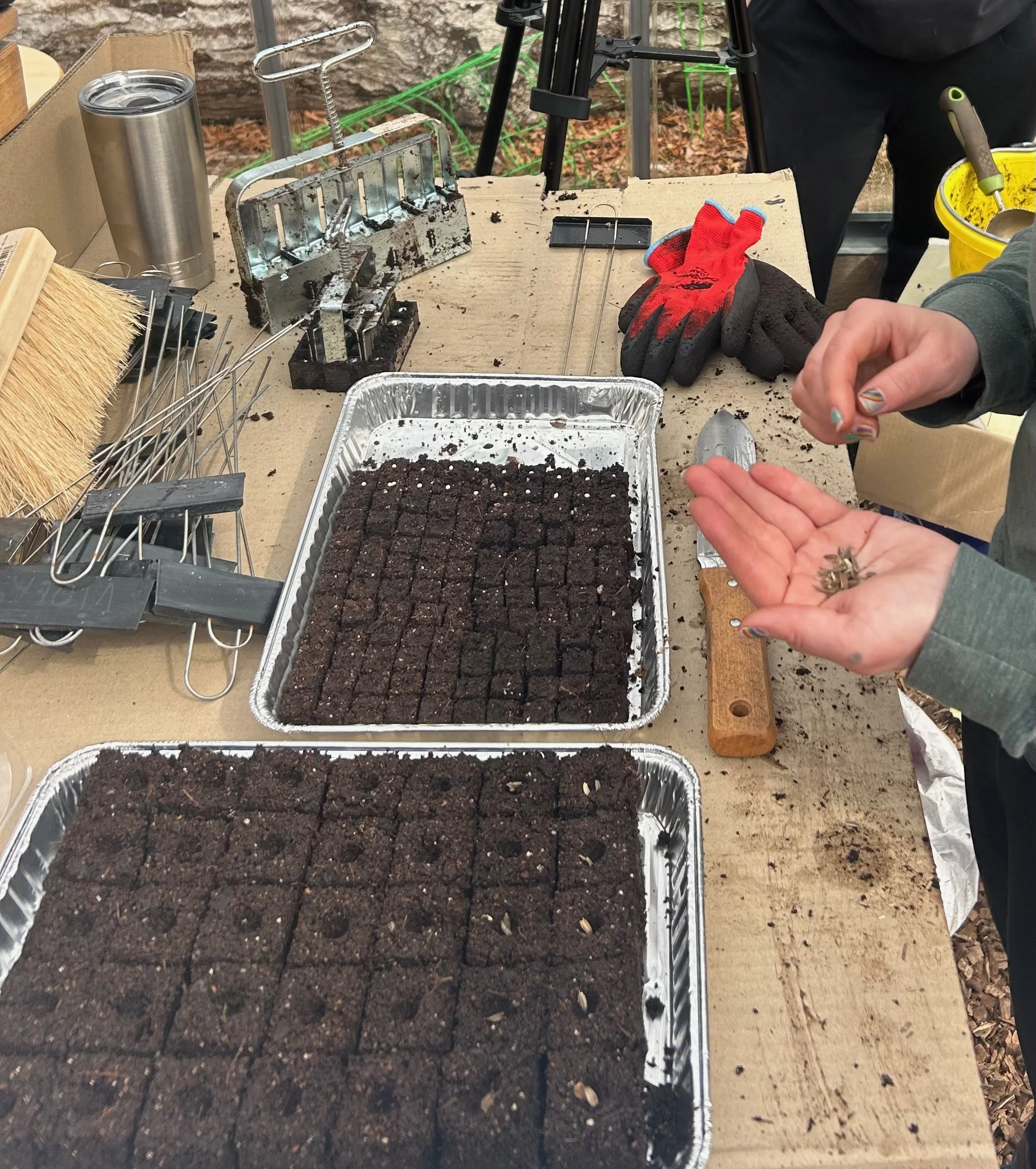
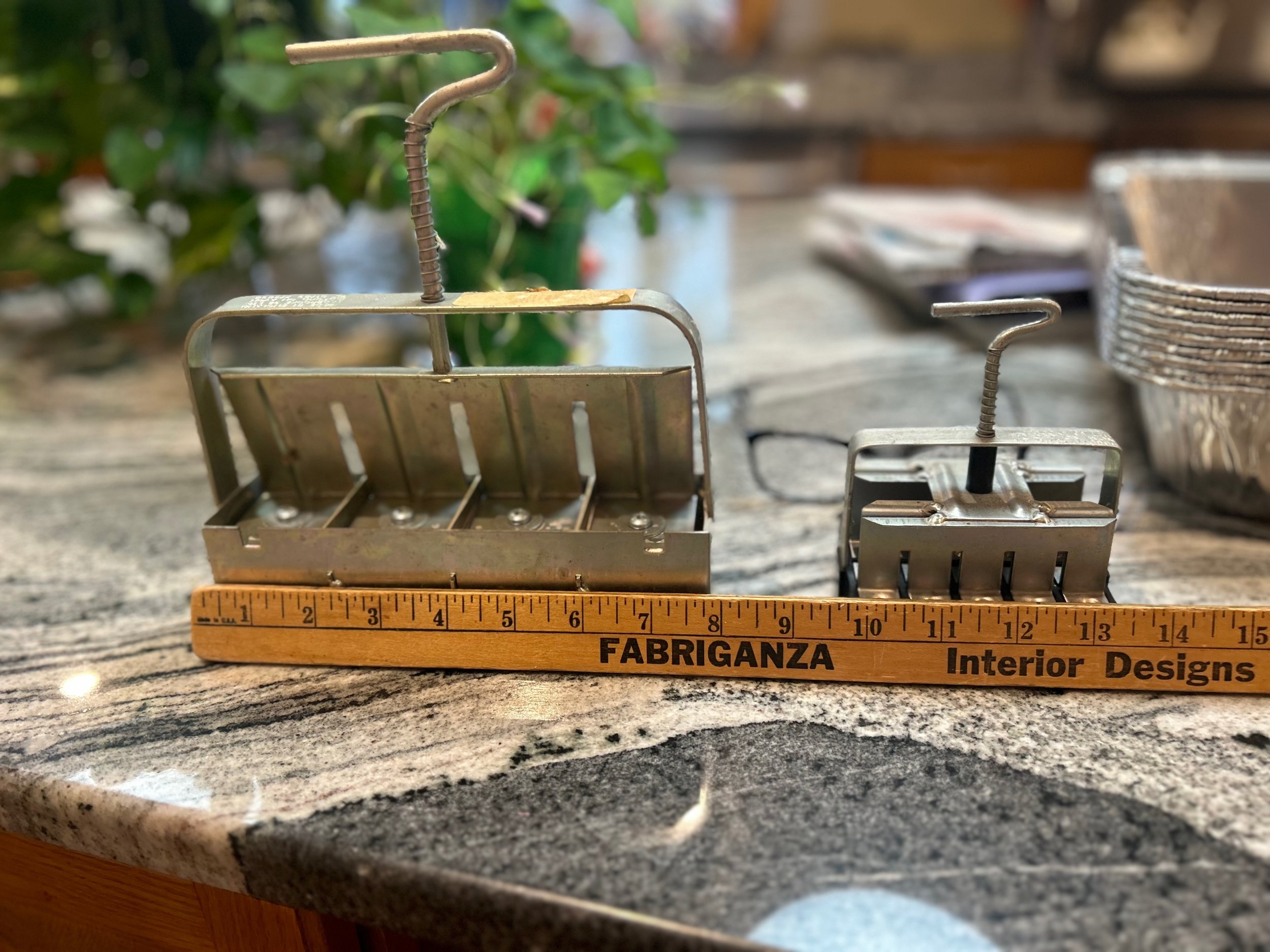
This year, we’re trying soil blocks, a method popularized by American farmer Eliot Coleman. He first encountered them in Europe in 1976, though the invention is credited to British engineer Michael Ladbrooke.
The process is wonderfully simple: you fill the soil blocker with good potting mix, squeeze the handle, and out pop neat, freestanding blocks of soil. Soil blocks eliminate the need for plastic pots—and they do something even better: they encourage strong, healthy root development.
Here’s the problem with traditional methods. In a regular seed flat, roots wander wherever they please, quickly tangling with their neighbors. When it’s time to separate the seedlings, you inevitably tear the roots, causing stress and setbacks for the young plants. It’s no fun for anyone.
If you give each seed its own cell in a plastic tray, the roots often circle endlessly around the edges, forming a dense, stringy mass. The seedling becomes “root-bound.” Experienced gardeners then rip off the outer roots before transplanting, which always feels unnecessarily harsh—and wasteful.
Soil blocks solve this through natural “air pruning.” When roots reach the edge of the block and hit open air, they stop growing outward instead of circling. This self-pruning encourages the plant to develop a denser, more fibrous root system inside the block. The result is healthier seedlings that transplant with far less stress.
Soil blockers come in different sizes, and the smallest blocks nest neatly inside the larger ones—making them perfect for easy up-potting as the seedlings grow.
The first step is mixing the soil. Seeds don’t need rich organic matter at the very beginning (they carry their own food for the first true leaves), but the mix does need enough structure to hold together as a block.
Recipes vary widely. Brooke used a simple 3-2-1 mix:
3 parts coco coir
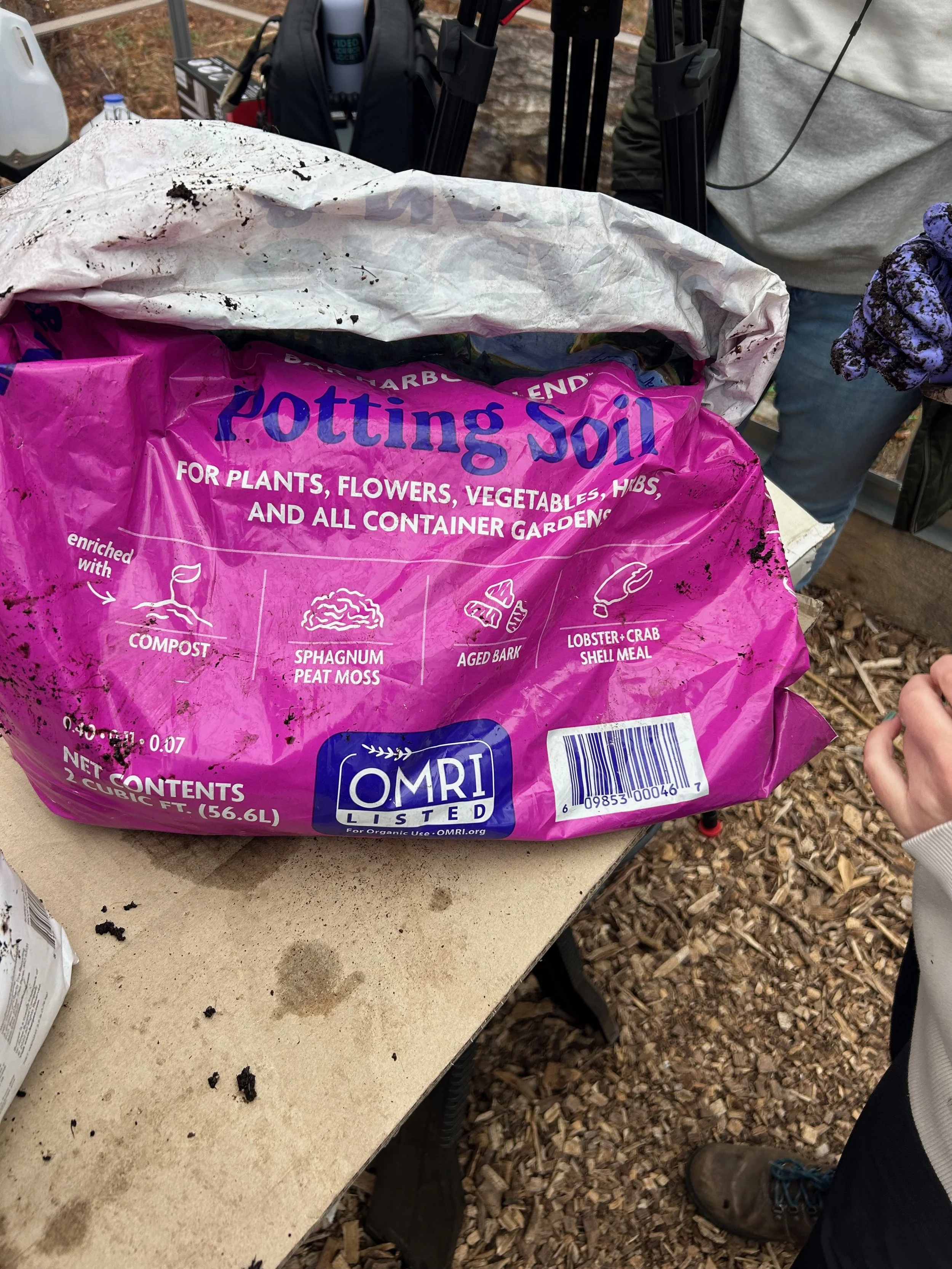
2 parts sifted compost (she used Coast of Maine potting soil, which contains composted plants, sphagnum moss, aged bark, and lobster shells)
1 part vermiculite
She moistened the mix until it held together when squeezed firmly in her hand. Then she loaded the soil blocker and formed the blocks.
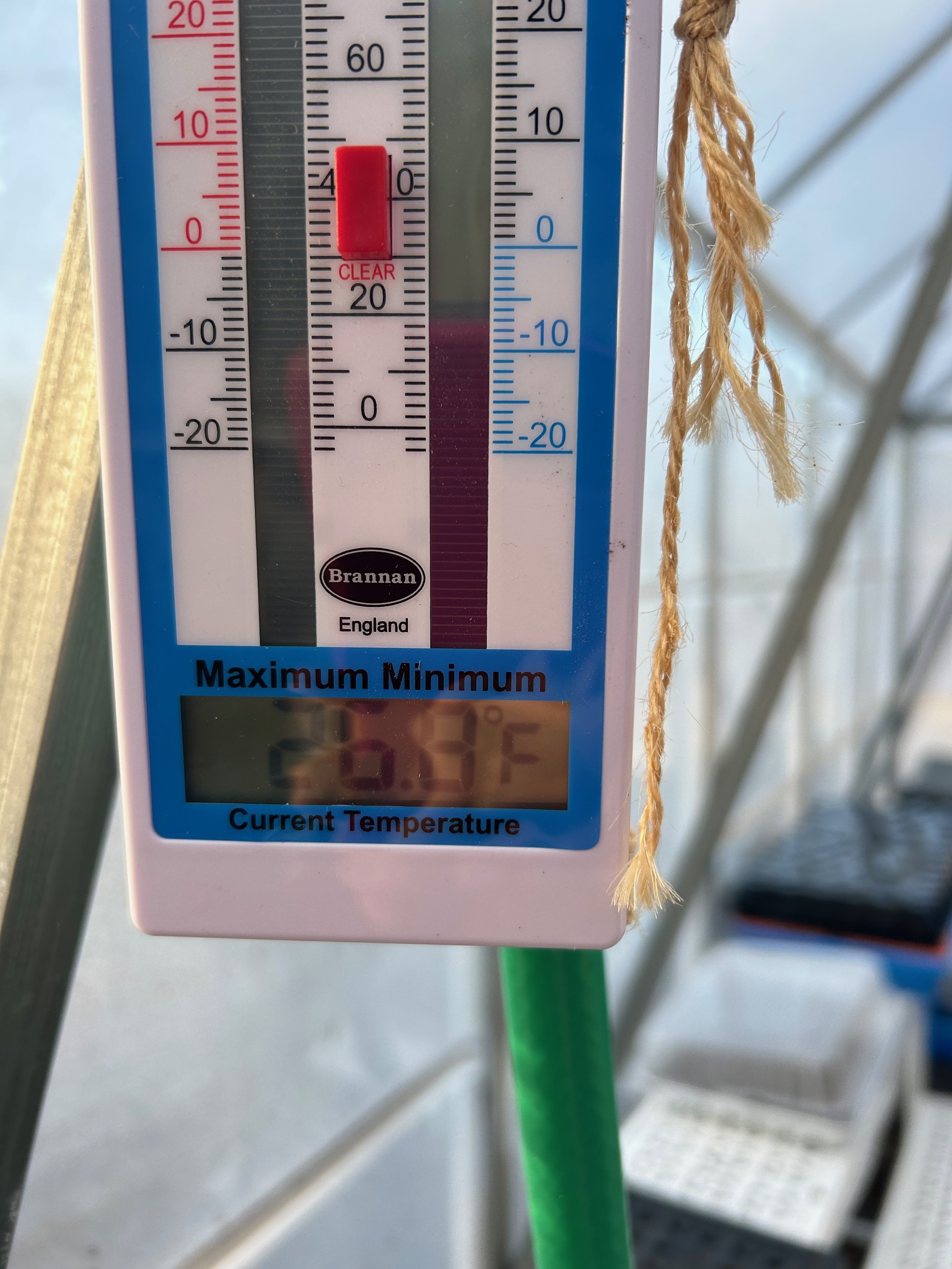
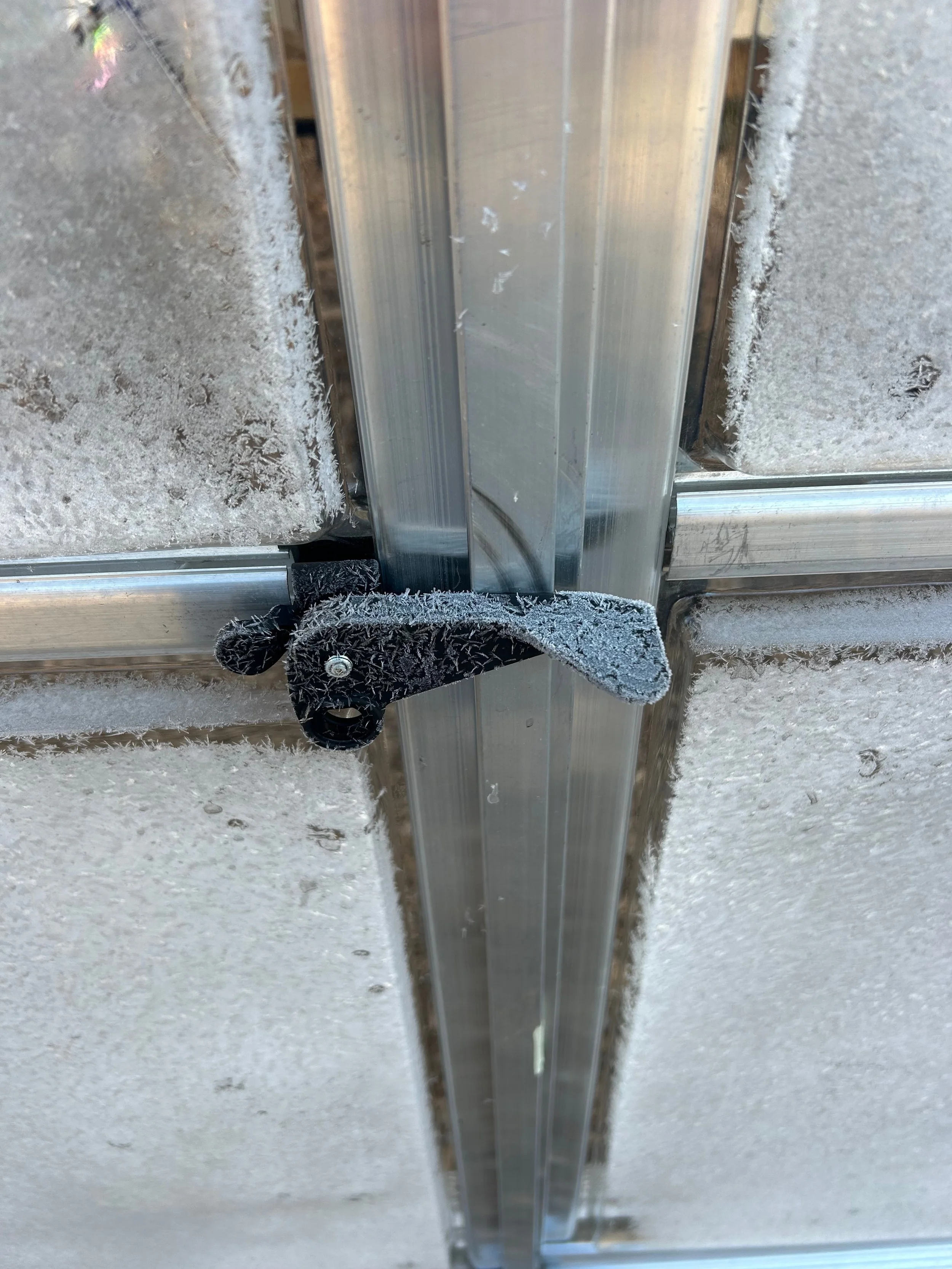
One week later, the blocks were still perfectly intact and moist, with healthy sprouts of chamomile, basil, parsley, and Thai basil emerging. The tray had received no additional water or care during that week—it was simply left covered on a shelf. Not surprisingly, the greenhouse thermometer showed temperatures had dipped below freezing at night, yet the seedlings were completely unfazed.
We’ll share more updates as we continue experimenting with soil blocks this season!
REGENERATIVE SOIL
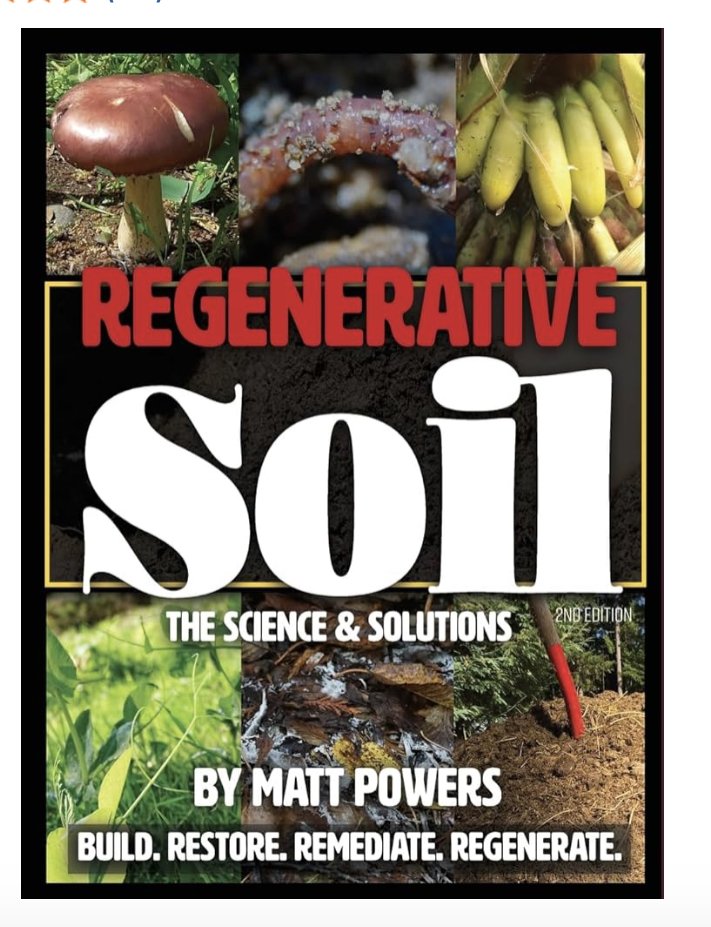
My own attention has been captured by a new gardening book: Regenerative Soil by Matt Powers. I only discovered Matt about a month ago, but his ideas have been dominating my thinking ever since. He strongly reinforces CVM’s core mantra — Keep the soil covered! — while offering clear technical explanations for why it matters so much. He introduces the “five cousins” that govern food production, gives practical advice on encouraging plants, and explains how to test your soil. I’m now reluctant to plant anything new until I fully understand what he’s suggesting.
Just to recap:
In Season One at CVM, we grew herbs for the COA kitchen.
In Season Two, we opened the project to the public and told our vicars (the allotment holders), “One effective way to grow vegetables is by keeping your soil covered — but if you have a better idea, go for it.” That turned out to be a bit awkward, because there aren’t really any better ideas. We eventually had to circle back and say, “Actually… everyone needs to keep their soil covered.”
This season — Season Three — we’re being upfront from the start: “This project is about keeping the soil covered. If that’s not how you want to garden, you might be happier with a plot somewhere else.”
Why is covering the soil so important?
I usually share memories from my childhood, talk about Ruth Stout, and say that covering the soil simply works well for me. Thankfully, that has been good enough for our 2026 vicars so far.
Now along comes Matt Powers with science-backed explanations about the critical importance of never leaving soil exposed to air. He confirms every one of Ruth Stout’s tenets and takes them much further. I think she would have loved him. Both emphasize the same core message: Soil is everything. Never till. Keep it covered. If you have great soil, you don’t need pesticides, fertilizers, or chemicals. If you keep the soil covered, you won’t need to weed or water nearly as much.
Matt Powers shows how fostering regenerative soil leads to faster, healthier, more productive, and resilient plants that produce tastier, more aromatic crops. You save time, money, effort, and energy — and your soil (and harvests) only get better each year. The approach works at any scale. This is exactly what Ruth Stout promised, and precisely what CVM has been working toward all along.
Ruth Stout’s soil test was beautifully simple: If you have earthworms, your soil is very good — and getting better — thanks to their castings (natural fertilizer) and tunneling (natural aeration).
Matt Powers is a huge fan of worm castings, worm tea, and all things organic. He also uses a microscope and his iPhone to observe the living biochemistry of the soil. He reveals that plant roots are actually energy producers, and he captures astonishing microbial activity on video.
Summarizing all his assertions isn’t easy (I still have a lot to learn), but his results are remarkable. For example, he grew a variety of spinach in soil that received no water for three months while temperatures hit 140°F. His book has been published in many languages and has a passionate following, including ardent fans in Africa.
Matt isn’t really saying anything brand new. Terra preta was created in the Amazon 8,000 years ago. Twenty years ago, I attended a Marion Garden Group talk where a speaker from Cape Cod enthusiastically explained how pouring a liquid containing mycorrhizal fungi could dramatically increase blooms on hydrangeas. I was so inspired that I immediately went out and bought some.
What is new is the way Matt uses his iPhone microscope to film these processes in action — showing exactly how mycorrhizal fungi amplify root activity, and revealing the roles of microbes, enzymes, and ions. He even explains how water isn’t just water: it’s made of O⁺ and OH⁻ ions whose polarity drives so much of life.
Expect CVM to double down on keeping the soil covered (as if we wouldn’t anyway) and to dive deeper into the fascinating mysteries Matt Powers is revealing. More to come!
2026 TULIPS
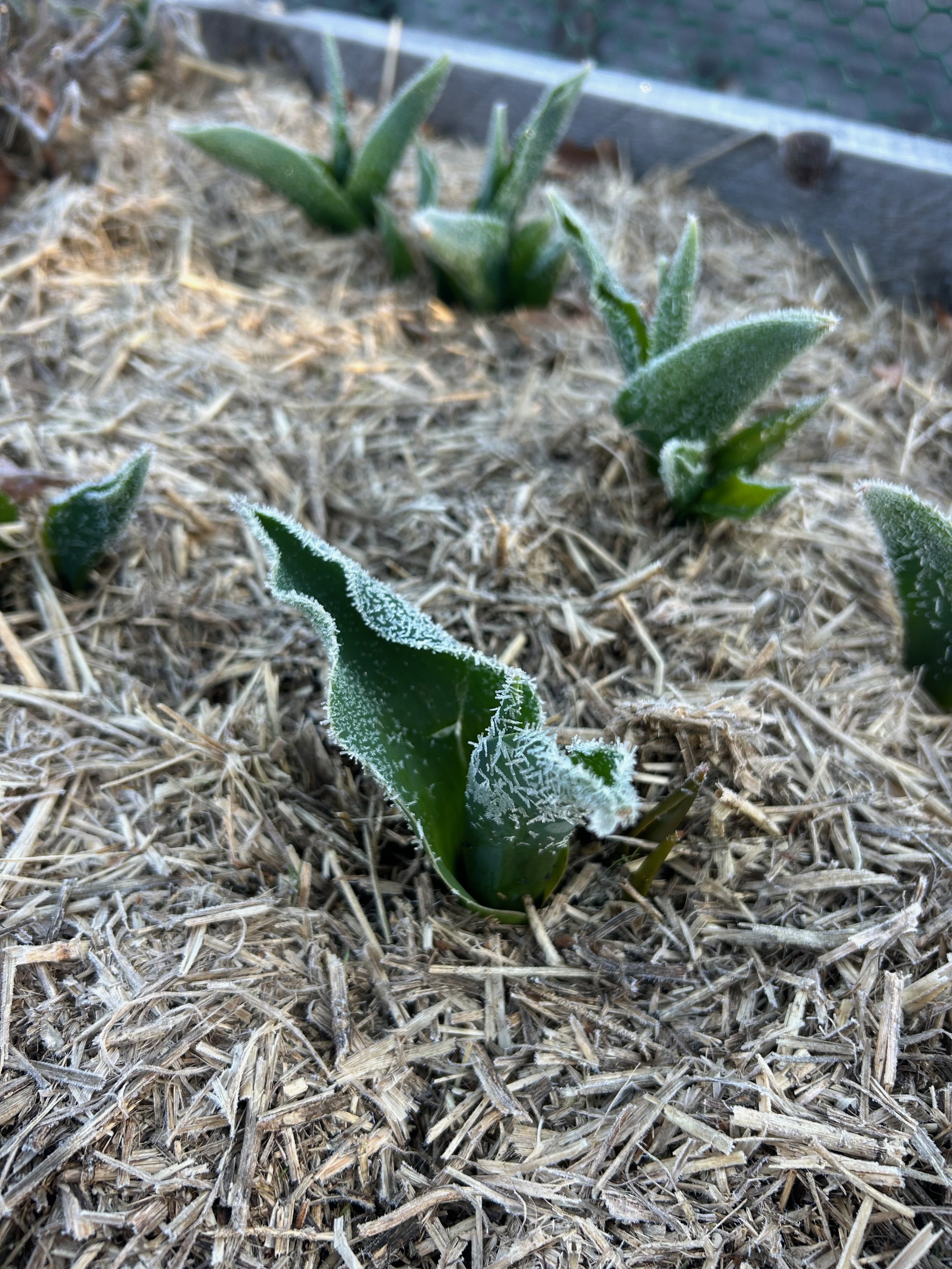
The edible garden is emerging with about 50 tulips, and we can hardly wait to see what sort of flowers are pushed up.
I did not know tulips were edible- and they are not good to eat. Do not eat them. In her book about vegetable gardening, Lolo Houbein talks about throwing up after eating tulip bulbs, but it was all the food her family had in post World War 2 Holland. She wrote One Magic Square for her grandchildren, to introduce them to fun, tasty, easy way to grow their own food on just one square yard of dirt. The first edition is much better than the second edition, which is clouded with explanations that get in the way of the joy of growing. Still ,it is a brilliant approach to help new gardeners fall in love with growing food.
Someone gave us a box of tulip bulbs last fall, and we thought we would dig them into the edible garden, on a technicality that tulips could arguably be considered food- but don’t eat them. They should bloom before anything else has a chance to get started. When they are done, we will yank out all the bulbs, as people do with tulips.
The edible garden was the creation of Robina Worcester, and we hope to keep it going in her memory.