
QE2 Gets a Renovation
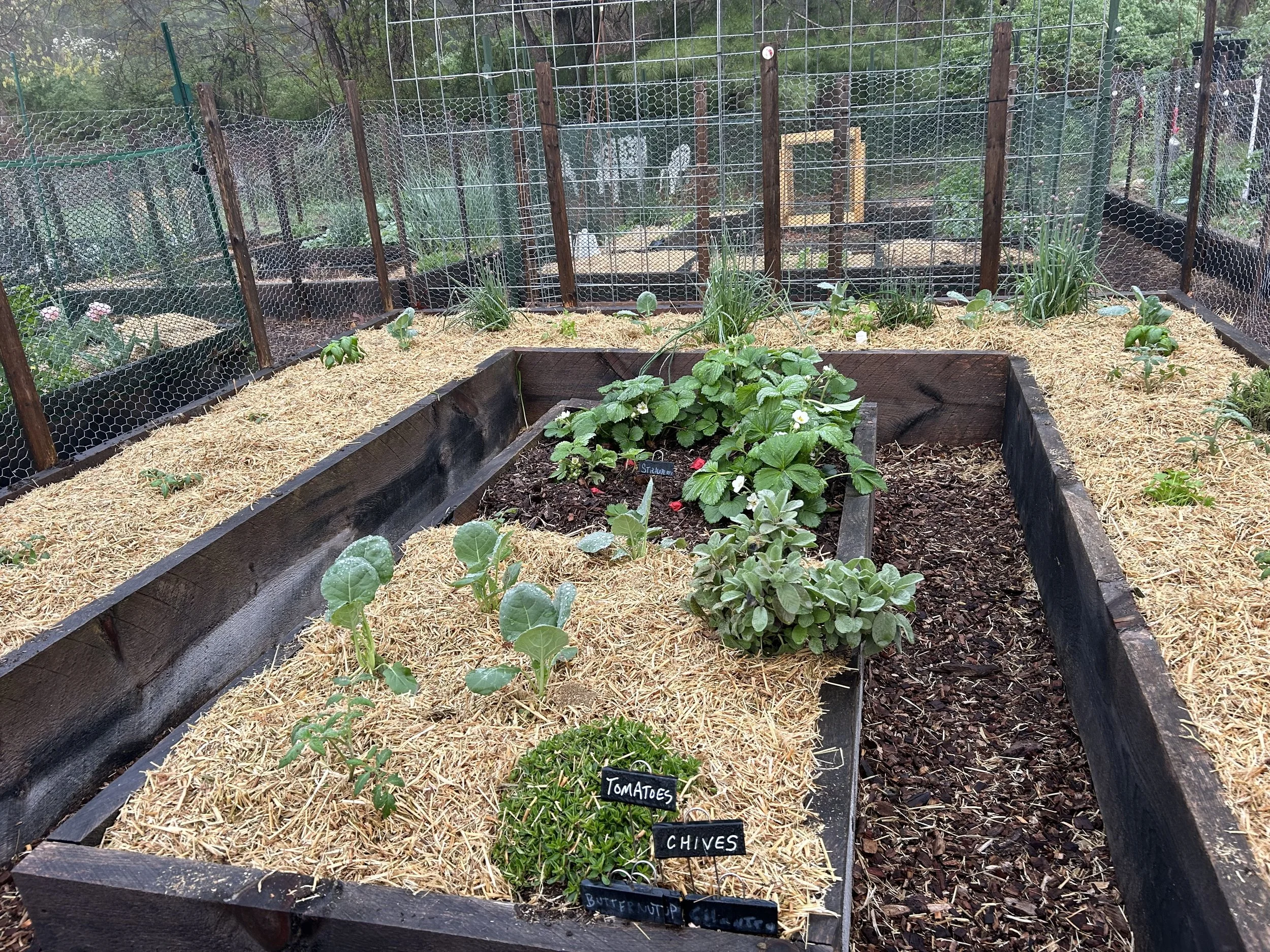
May 13, 2026, QE2 got its Spring Overhaul. Sage, oregano and red rocks, meant to fool birds, are holdovers from last season. Newly added are broccoli, tomato, cilantro, lavender, chive, and cucumber. Plants are store bought.
Community Veg Marion 2026: Each allotment does its own thing. Let’s take a look at QE2.
We do not take nearly enough before and after photos, but we have a few this year for QE2.
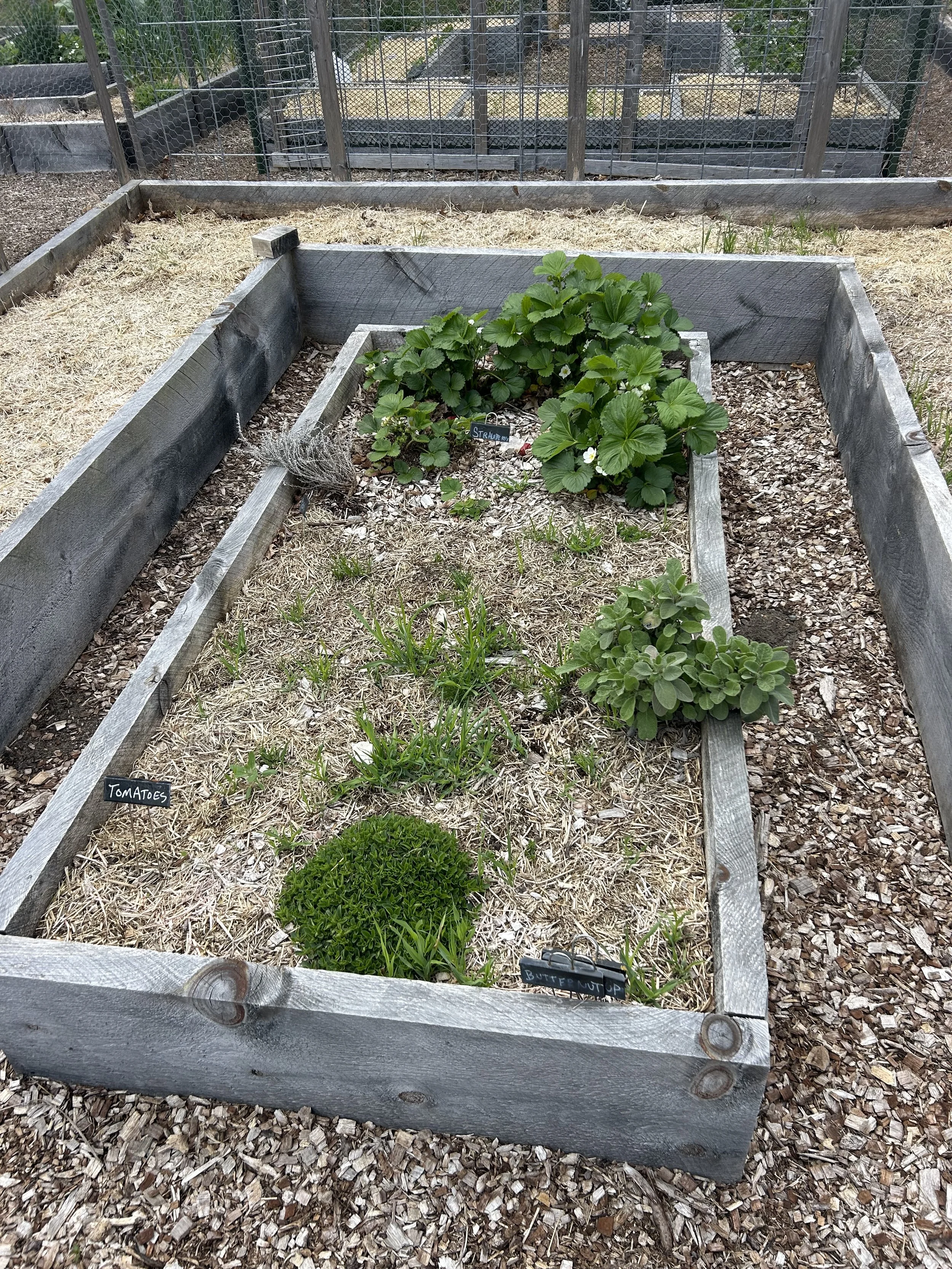
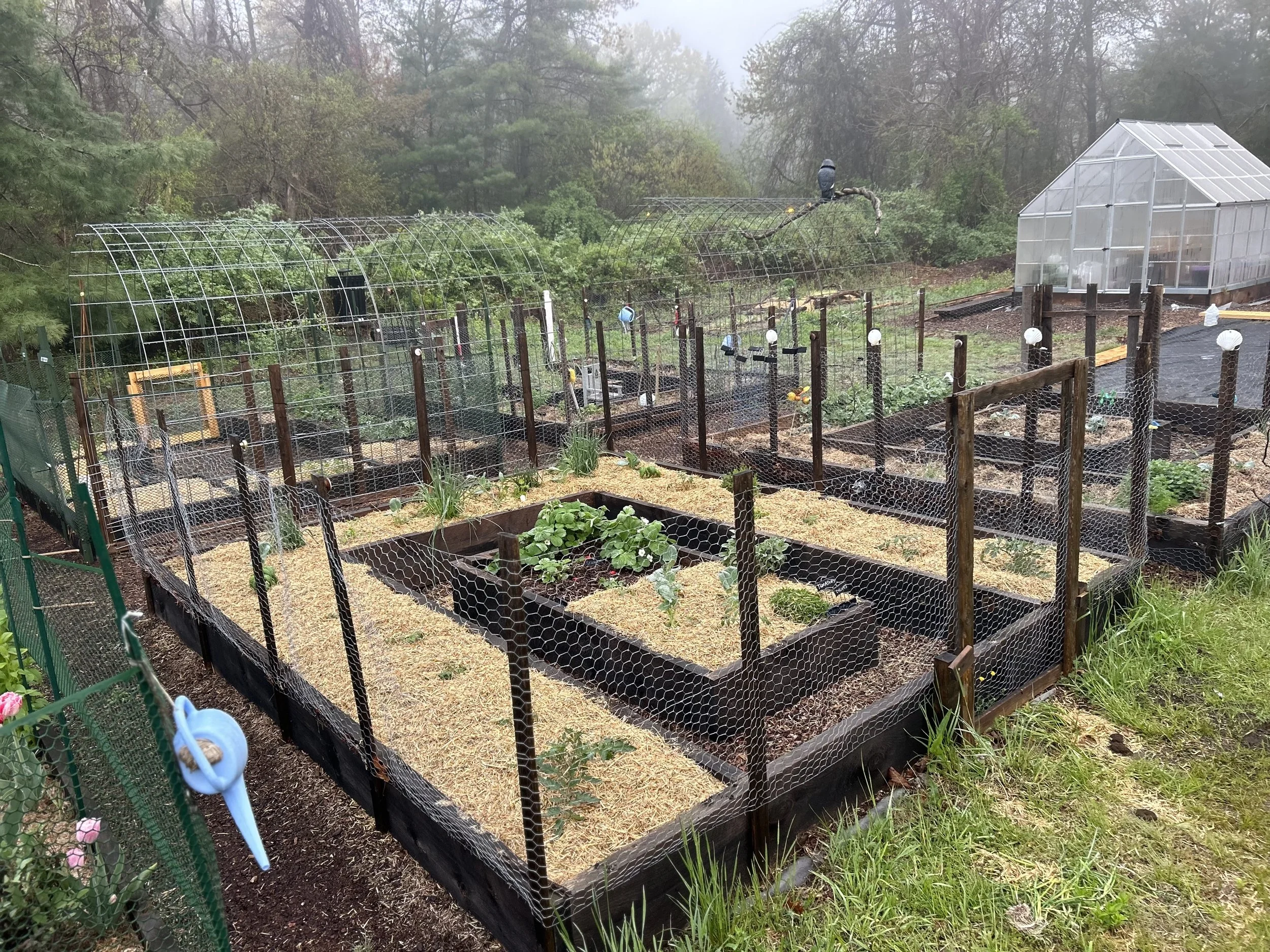
Before jumping in, we took a careful look at what we had. One thing immediately noticeable is the amount of exposed wood along the sides of the raised beds. That tells us the soil level has dropped over time, which is perfectly normal. Rich organic soil continually decomposes and compresses, and a little is always lost when old plants are pulled out at the end of the season.
Ideally, each spring begins with a refresh: old decomposing straw removed, fresh compost added, and a new layer of clean straw spread across the beds.
How much straw is enough? In spring, 4–6 inches of mulch is usually adequate. But once the rains slow and summer heat arrives, the beds benefit from 8–12 inches to slow evaporation and retain moisture. Mulch depth becomes a balancing act. Skimp on mulch, and watering becomes much more necessary.
Can you still plant into last year’s beds using last year’s straw? Absolutely. Most gardeners do it at one time or another. In gardening, never let a good idea become paralyzed by a better one. If there is not enough time or energy for a full renovation, it is perfectly reasonable to make do for another season. Sometimes the best approach is to plant one section immediately and renovate another section later.
Truthfully, many gardens evolve exactly this way. Winter crops such as kale, collards, carrots, and parsnips linger on, and Brussels sprouts inspire optimism long after they probably should. Then suddenly it is time for winter sowing, while the weather still feels too raw for major bed work. Jugs get tucked into last year’s straw. Friends hand over extra seedlings, and those get planted too. Before long, the bed is full again, and the grand renovation quietly slips to another year. It happens.
Returning to the “before” picture, there is already plenty of life at QE2. The oregano looks vigorous, the sage appears healthy, and the strawberries are already blooming. There is also one clearly dead plant beside the berries, along with another less welcome sight: grass.
Grass may be one of the gardener’s fiercest enemies. Its roots aggressively compete for space, nutrients, and moisture. In rich soil, grass thrives so enthusiastically that it can eventually crowd out nearly everything else underground. Pulling a single blade is easy enough, but removing established clumps can do a lot of damage.
A thick layer of straw helps suppress weeds, though grass seeds inevitably arrive with that straw. Left unchecked, they can gradually threaten the entire planting. The grass at QE2 will need to be removed carefully before any further work begins, ideally without scattering soil across the clean straw. Going forward, every invading sliver of green grass should be treated as an early warning sign and removed promptly.
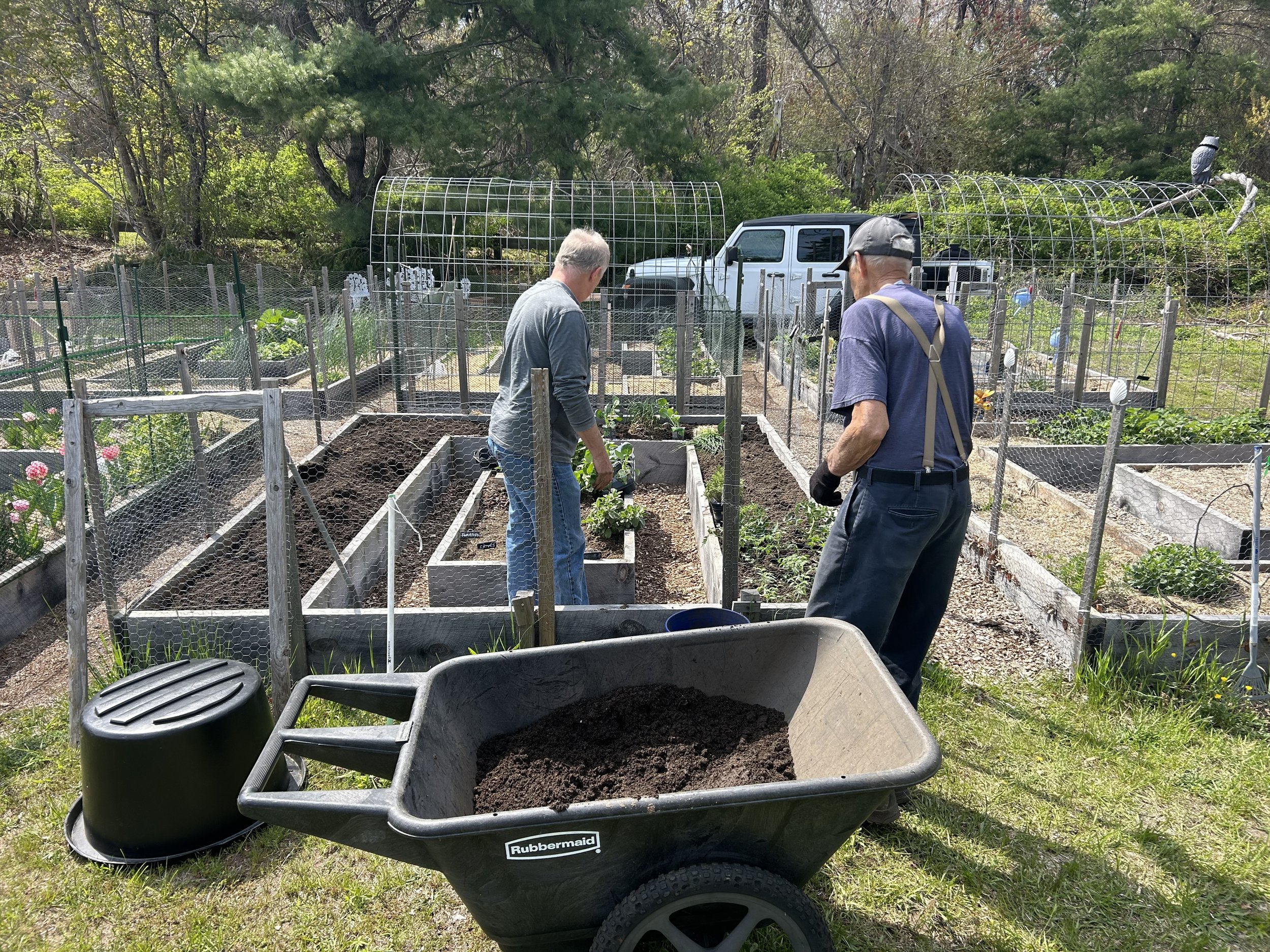
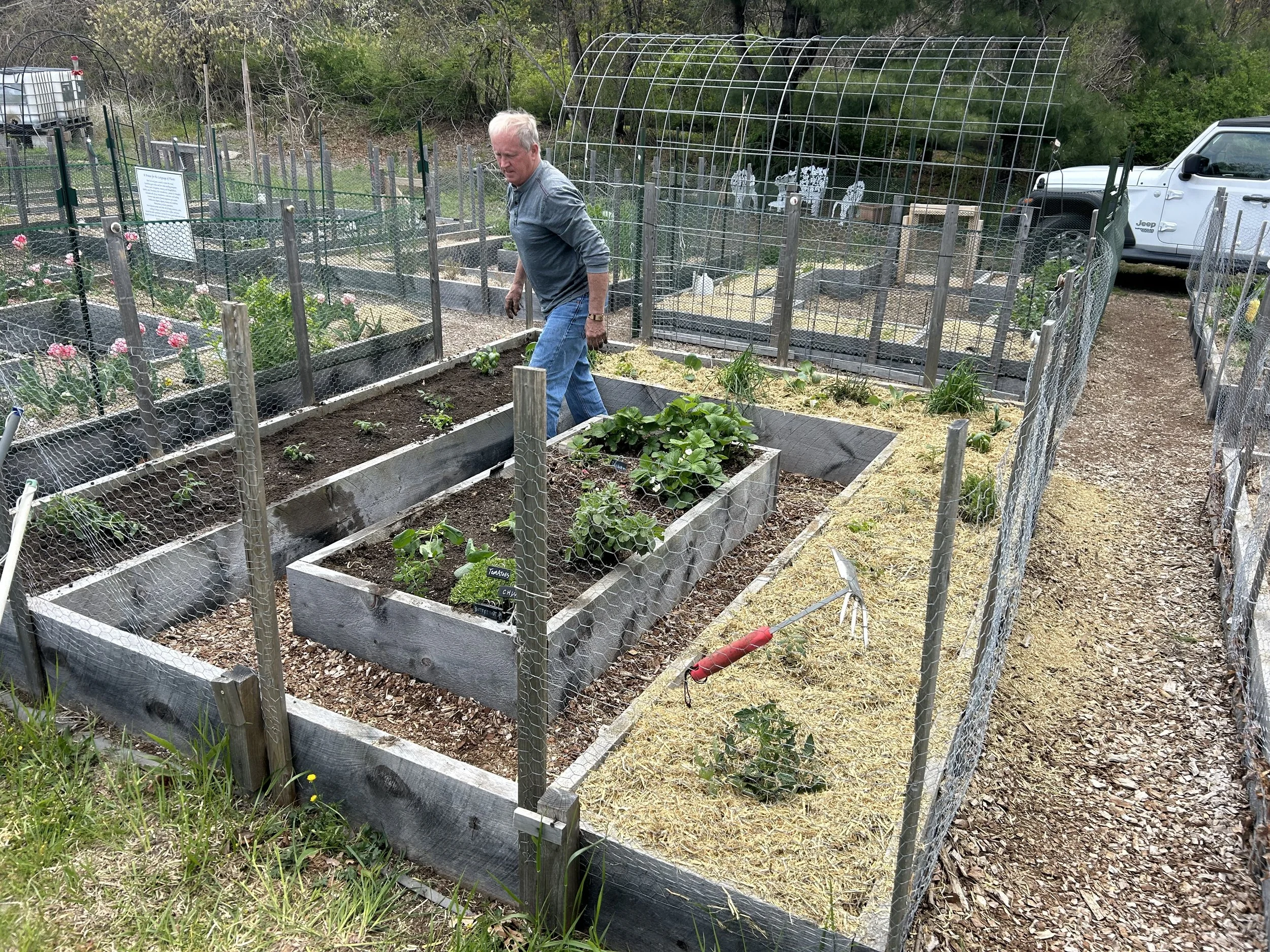
This season, the Vicar of QE2 arrived with a truckload of store bought plants on a sunny day, and revamped the whole allotment by removing all the old straw, pulling out the grass, and adding about 12 wheelbarrow loads of fresh compost. The sage and oregano were lifted up about 4 inches. Herbs tend to like a bit of agitation, so the uprooting is likely to invigorate their growth.
Once the beds were freshened, the store bought plants were arranged, rearranged and juggled some more. It was decided to plant the 8 cucumbers in back, by the trellis. In front of them were planted 8 broccoli , and 3 chive to try and ward off nibblers. The ten tomato plants were split five and five on either side, with a cilantro on one end and a lavender on the other. This is a vicar who loves tomato, broccoli, and cucumber. In small allotments, we use great soil and plant closely. In my opinion, this allotment is way overplanted. I expect a jungle in July. I love a jungle. I can hardly wait to see what happens.
New pine mulch was added to the strawberries. Pine is said to offer slightly acidic conditions which strawberries enjoy. Perhaps an organic fertilizer should be added for these heavy feeders. Maybe even a few more painted red-rock decoys to confuse hungry birds before the berries ripen.
Overall, QE2 is all set. Now we wait an see what unfolds. As always, with new straw, you have to do a bit of policing and pull out new shoots before the grow into big root balls. Generally, the shoots stop after about three weeks, and then the straw is good for a year, so pretty good bang for the buck.
Thinking ahead, we want to have good stakes and ties on hand, because the tomatoes will need them. We have to watch out for garden pests. Thwarting theives and spoilers is our next frontier. The SIFI garden at QE2 is off to a fine start.